


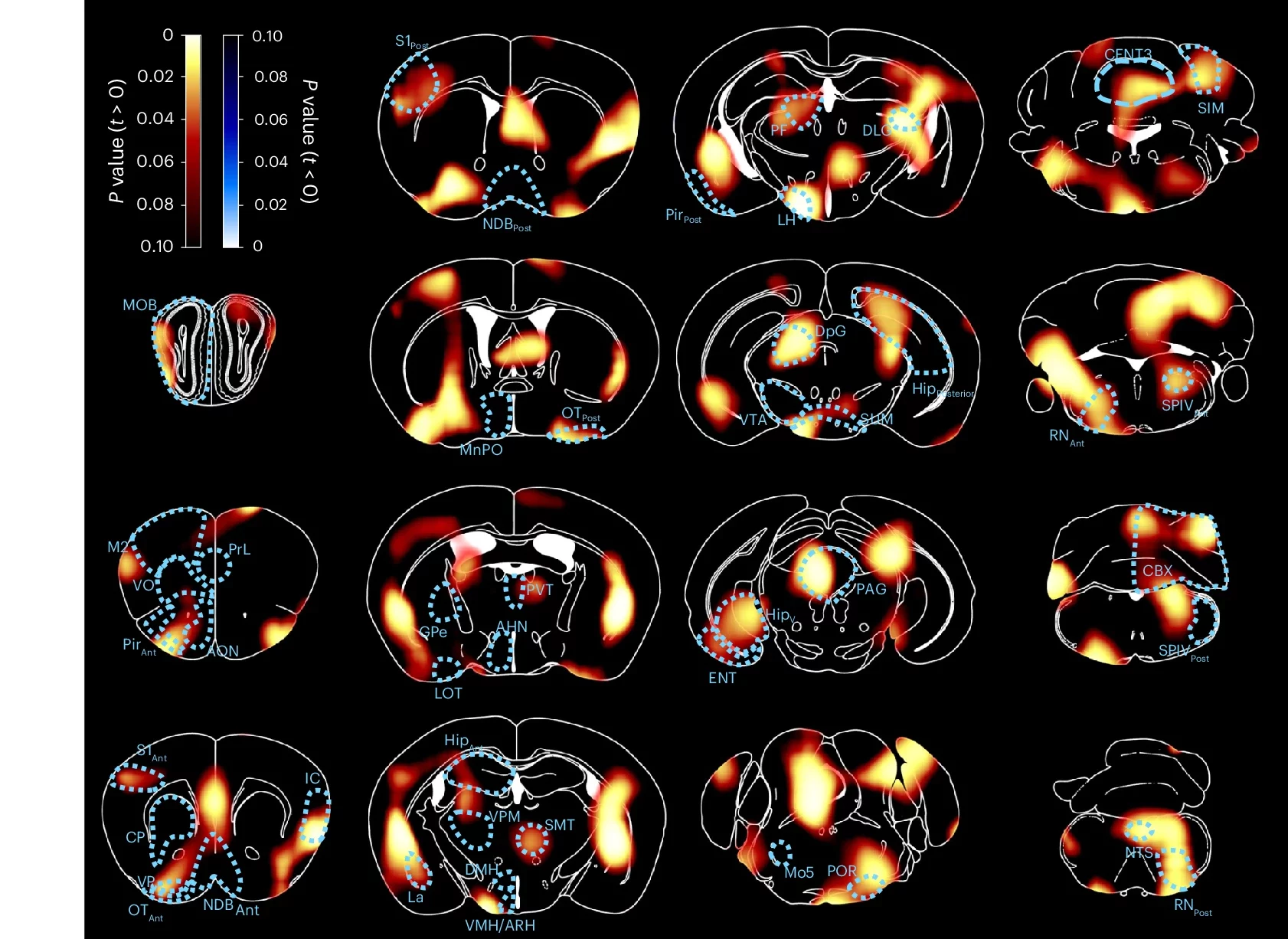
What if our sense of smell was the silent conductor of our food cravings? A recent study published in Nature Metabolism explores how our nose directly influences our appetite, via biological mechanisms closely linked to metabolism and the nervous system. A discovery that sheds new light on the complexity of our relationship with food.
The sense of smell, a key player in regulating appetite
It has long been known that food odours can stimulate the appetite or, on the contrary, provoke disgust. But researchers did not know precisely how the sense of smell biologically modulated food intake.
In a study published in June 2025 in Nature Metabolism by a consortium of researchers led by Dr Céline Riera (Cedars-Sinai Medical Center, Los Angeles), scientists have shown that olfaction does more than just evoke memories or stimulate the desire to eat: it also activates deep metabolic circuits, influencing insulin secretion, leptin sensitivity and overall energy metabolism.
In particular, the study shows that depriving mice of their ability to smell disrupts their food intake, body weight and hormonal response, even on an identical diet. Conversely, restoring the sense of smell reactivates certain metabolic pathways that help regulate appetite.
An important discovery for understanding obesity
Which makes this study particularly innovative, the link that has been established between the sense of smell and the hypothalamus, the brain's control centre, which regulates appetite and satiety. The researchers identified an olfactory-metabolic axis, involving in particular the activation of AgRP neurons (Agouti-related peptide), known to stimulate hunger.
In mice deprived of their sense of smell, these neurons remain inactive even in a state of fasting, which could explain a loss of appetite. Conversely, in mice exposed to food odours but unable to consume the food, activation of these neurons increased. In other words, smelling food without being able to access it stimulates hunger signals.
These results suggest that olfactory stimulation could have a metabolic effect independent of actual food consumption. This opens up new therapeutic perspectives in the treatment of obesity and appetite disorders:
- In obese patients, Hypersensitivity to food odours could encourage over-consumption.
- In elderly or malnourished patients, Stimulating the sense of smell could reactivate the desire to eat and improve nutritional intake.
What applications for the food ingredients sector?
For players in the food and ingredients industry, these discoveries are far from anecdotal. They invite us to reconsider the strategic importance of olfaction in product innovation, particularly in three directions:
1. Create olfactory profiles tailored to nutritional needs
Rather than simply seeking to enhance taste, formulators could develop flavours specifically designed to stimulate appetite in certain contexts (senior citizens, recovery from illness, clinical nutrition).
2. Play on aromas to modulate the desire to eat
Certain ingredients or aromatic combinations could be used as «olfactory modulators» to limit excessive food intake (snacking) or, on the contrary, to support renutrition programmes.
3. Exploring the effects of aromas on metabolism
With the support of research, certain odorous molecules could be selected for their impact not on sensory pleasure, but on the hormonal signals of satiety and hunger.
In a context where sensory and nutritional approaches are tending to converge, this new understanding of the nose-brain-metabolism axis opens up valuable avenues for R&D, sensory marketing and health nutrition departments.
Conclusion - Olfaction, a strategic lever that is still under-exploited
While the importance of flavours in formulation and sensory experience was already well known, this study is a reminder that their role goes even deeper. By directly influencing the hunger and satiety circuits, the sense of smell appears to be an essential regulator of our eating behaviour.
Brands that are able to integrate this dimension into their product development, particularly in the areas of clinical nutrition, healthy snacking and healthy ageing, could find it a real differentiating factor.
What if, in the future, flavourings were to become health ingredients in their own right?
Source
Riera, C. et al. Odor perception modulates food intake via hypothalamic AgRP neurons. Nature Metabolism (2025). DOI: 10.1038/s42255-025-01301-1