


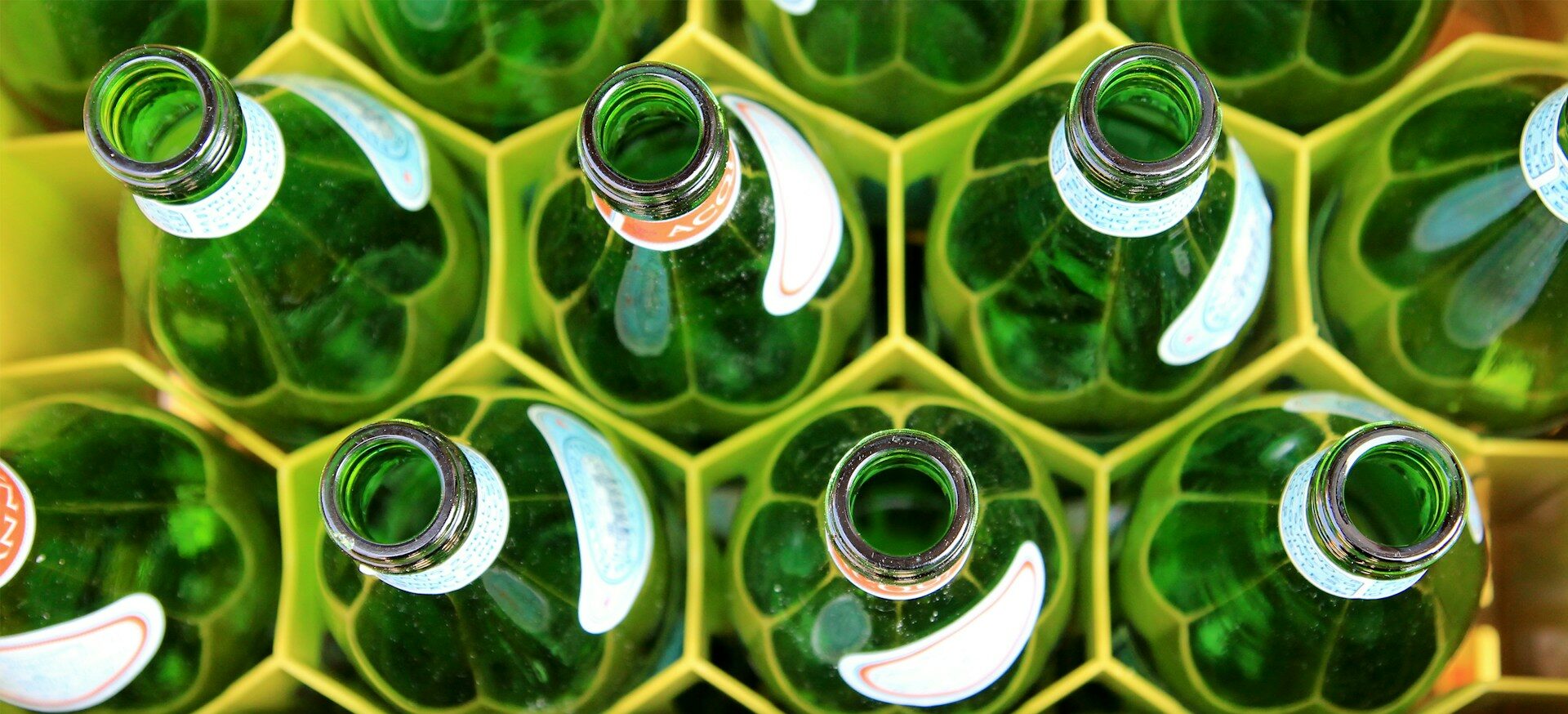
Beverages packaged in glass bottles contain, on average, more microplastics than those in plastic, cans or cartons. This is one of the unexpected results of a study conducted in 2023 by ANSES and published in 2025 in the Journal of Food Composition and Analysis. Short summary of the study.
Contrary to popular belief, glass is not the safest container when it comes to contamination by microplastics (MPs). The study shows that :
- Beers (82.9 ± 13.9 MPs/L), colas (31.4 ± 16 MPs/L), iced teas (28.5 ± 13.1 MPs/L) and lemonades (45.2 ± 21.4 MPs/L) were the most popular. glass bottles are the most contaminated.
- Bottled water has a much lower level of contamination (2.9 ± 0.7 MPs/L on average), but here again, glass bottles (4.5 MPs/L) are more contaminated than plastics (1.6 MPs/L).
- Wine is an exception The highest levels of contamination were found in the bricks (30.0 ± 16.9 MPs/L), not in glass (5.3 MPs/L).
The authors note: «All the types of beverage analysed were contaminated, but at very different levels depending on the type of container».»
One source identified: the painting of metal caps
Why is glass more contaminated? The experimental investigation carried out by the team shows that the main source is not the glass itself, but external painting of metal capsules (screw caps).
Microplastics found in glass beverages are often made from same colour as the capsules. Analysis by infrared spectroscopy (µFT-IR) confirmed that it was polyesters or alkyd lacquers, identical to the composition of capsule paints.
Laboratory tests have shown that :
- A cap that is not cleaned before screwing on releases an average of 287 MPs/L into a bottle.
- After blowing (air): 105 MPs/L.
- After blowing + rinsing with water/ethanol: 86 MPs/L.
In other words, capsule cleaning greatly reduces contamination, but does not eliminate it completely.
What size microplastics? Which material?
The study characterised the PMs according to their shape, size and nature:
- Shapes 90 to 97 % of the microplastics detected were fragments, the rest being fibres.
- Sizes between 30 and 500 µm, mainly in the 50-100 µm and 100-500 µm classes.
- Polymers the most common are polyesters (PET, alkyd resins), followed by polyolefins (PE, PP), polymethacrylates and polystyrenes.
Microplastics are present even in non-carbonated drinks, and no brand or origin of drink (spring water vs. mineral water) is completely unaffected.
A first in France, a challenge for the industry
This is the first study to document the presence of microplastics in common drinks sold in France, taking into account the effect of types of packaging. She underlines :
- The absence of European regulations on microplastics in beverages other than drinking water.
- The urgent need for better control of quality of sealing materials, in particular painted metal capsules.
As the article sums up:
«These results show that simple actions, such as cleaning the capsules before screwing them on, can significantly limit contamination».»
What are the key messages for the food and drinks industry?
This study invites us to rethink certain industrial reflexes. Among the implications:
- Glass is not synonymous with purity The risks associated with screw caps need to be reassessed.
- The choice of materials and decorative inks is becoming strategic from a clean label and health safety perspective.
- Analysis of the production chain (capsules, bottling, storage) must be reinforced to prevent any contamination.
Conclusion: an invisible but very real challenge
The French study, which is both rigorous and pioneering, warns without alarming: microplastics are ubiquitous, and their origin is sometimes counter-intuitive. As long as the toxicological impact remains uncertain, reduction at source is the best precautionary strategy.
References
Chaïb I., Doyen P., Merveillie P., Dehaut A., Duflos G. (2025). Microplastic contaminations in a set of beverages sold in France. Journal of Food Composition and Analysis, 144, 107719. https://doi.org/10.1016/j.jfca.2025.107719