


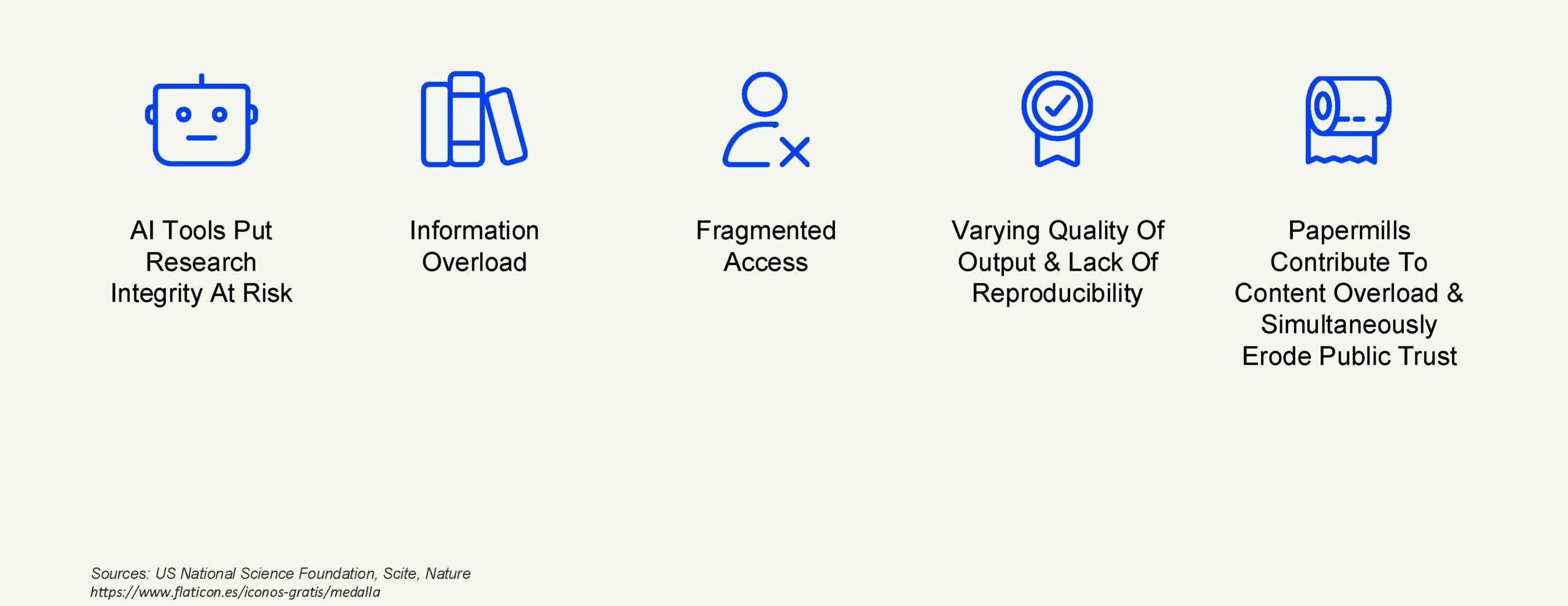
The growing power of artificial intelligence tools now enables fraudsters to produce scientific articles so convincing that they «cannot be recognised as false», according to expert Anna Abalkina. The «article factories» are now moving from copying stolen images to creating bespoke, unique visuals, making it considerably more difficult for publishers and anti-plagiarism tools to detect them. The phenomenon of scientific fraud is frightening insofar as it can provoke a real crisis of knowledge.
A phenomenon that is accelerating with the power of AI
This comes as no surprise. Up until now, article factories have produced content that was not very original, and could be identified by reused images or blatant inconsistencies. Generative AI has totally changed the situation:
- Textautomatic writing of complete articles, imitating academic style and incorporating plausible false data.
- Imagescreation of new figures, graphics and computer graphics on request.
- Allocationmisuse of the names of legitimate researchers to lend artificial credibility.
According to a SAGE Publishing, These techniques are enabling scientific fraud to keep pace with improvements «comparable to Moore's Law»: The quality and quantity of fake articles doubles as tools become more sophisticated.
A systemic risk for the scientific ecosystem
The problem goes beyond one-off fraud. Fake articles are now feeding the databases used to train future AI models. This «data pollution» could perpetuate and amplify scientific misinformation, creating a self-perpetuating cycle of false knowledge.
Risks identified :
- Loss of confidence in the scientific literature.
- Wrong decisions based on falsified data.
- Snowball effect in training AI models.
Magazines already affected
Some magazines have detected the systematic publication of articles produced by AI and signed in the name of real researchers, without their consent. This type of fraud, which is more difficult to detect than traditional plagiarism, requires new verification protocols: metadata analysis, image tracing, detection of recurring narrative patterns.
What are the possible answers?
Several avenues are being explored in response to this emerging crisis:
- Training editorial committees identifying weak signals of fraud.
- More advanced AI detection tools, combining linguistic analysis, image verification and metadata.
- Strengthening peer review, with validation of the raw data.
- Traceabilitycertification of the origin of images and data sets.
But above all, more than ever, the good old reflex of cross-checking information sources, verifying them, questioning them... is a topical one! But are you still doing it today? This introspection is probably necessary for each and every one of us!
References
- Hot Air - Scientific fraud may now be keeping up with Moore's law (4 August 2025)
https://hotair.com/john-s-2/2025/08/04/scientific-fraud-may-now-be-keeping-up-with-moores-law-n3805491 - SAGE Publishing - The real threat of AI-powered research paper mills to academic publishers (22 Nov. 2024)
https://www.sagepub.com/explore-our-content/blogs/posts/asia-pacific-insights/2024/11/22/the-real-threat-of-ai-powered-research-paper-mills-to-academic-publishers - Hindustan Times - Scientific journals can't keep up with flood of fake papers (2025)
https://www.hindustantimes.com/science/scientific-journals-can-t-keep-up-with-flood-of-fake-papers-101754338393178.html - Dataseer - What experts are saying about the future of research integrity in an AI-driven world (12 March 2025)
https://dataseer.ai/2025/03/12/what-experts-are-saying-about-the-future-of-research-integrity-in-an-ai-driven-world/ - Research Integrity and Peer Review – Paper mills, ghost authors, and research misconduct in the age of AI (2025)
https://researchintegrityjournal.biomedcentral.com/articles/10.1186/s41073-025-00165-z