


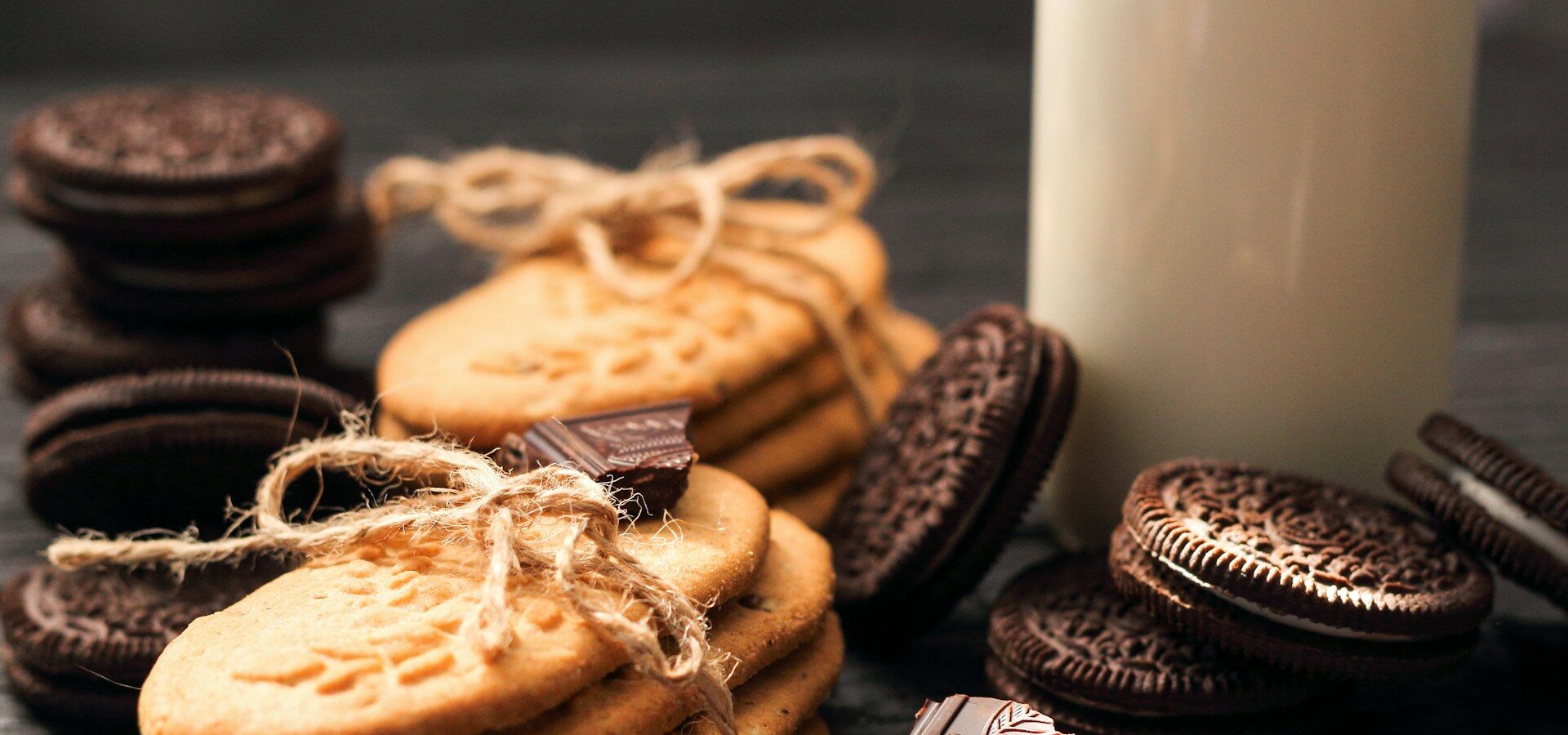
AI in the food industry is transforming the industry with the subtlety of a mixer in mayonnaise: there is no turning back. Four giants - Nestlé, Unilever, Kraft Heinz and Mondelez - have each developed their own proprietary recipe. Here's a look at how artificial intelligence is redefining the codes of food innovation.
Nestlé: AI as a catalyst for innovation
The ideas machine is running at full speed
The Vevey-based giant has industrialised creativity with results that would make any product manager green with envy: 1,300 concepts generated, 30 of which are still in active development. More impressively, the R&D cycle shrank from 12 weeks to 3 weeks, an acceleration of 75%. This performance is based on three technological pillars:
- Intelligent form optimisation : AI simultaneously analyses costs, regulatory compliance and nutritional objectives. Imagine a nutritionist with a quantum calculator - that's the Nestlé approach.
- Creative digital twins : No more repetitive photo shoots. Digital models generate packshots, localised visuals and seasonal campaigns without mobilising physical creative teams.
- Supply chain under surveillance : Contract analysis covers 80% of supplier spend, automatically detecting discrepancies between global clauses and local application.
Critical analysis: strengths and limitations
Highlight: The holistic approach avoids the pitfall of technological silos. Zone d'ombre : Could algorithmic dependency erode the spontaneous creativity of teams?
Unilever: Simulation as a new field of experimentation
Millions of tests, zero test tubes
Unilever takes virtualisation to the extreme: millions of recipe combinations tested in a few seconds via simulation in-silico. This approach is particularly effective for simultaneously integrating texture, microbiology and industrial constraints. Practical case study : Hellmann's vegetable mayonnaise and its squeeze bottle version were entirely designed virtually before any physical prototyping.
Measuring operational efficiency
3D digital twins (Nvidia Omniverse, OpenUSD) generate substantial savings:
- Cost reduction: -55%
- Time acceleration: -65%
Unilever's Polish plant is a perfect example of this optimisation, with 10% in energy savings and 20% in reduced cleaning cycles.
Strategic diagnosis
Major innovation: Integrating industrial constraints right from the design phase. Questioning: Can simulations totally replace human sensory intuition?
Mondelez: Speed and personalisation, the winning combination
Tenfold increase in productivity
70 new SKUs developed at a speed 2 to 5 times faster than traditional methods. This acceleration is based on two complementary levers:
- Generative marketing : Personalised images, text and video produced using generative AI (Accenture partnership).
- Real-time analytics : Automatic transformation of data flows into decision-making insights.
Technical focus: TasteGPT and directed innovation
The tool developed with Thoughtworks (70+ projects) was used to create the Gluten Free Golden Oreo without compromising on taste. The approach combines trend analysis and form optimisation.
Key Insight : Personalisation doesn't sacrifice authenticity - it multiplies it.
Kraft Heinz: Quality under algorithmic control
Global predictive supervision
The digital «control tower» orchestrates the supply chain via digital twins in real time, anticipating anomalies before they manifest themselves physically.
- Applied artificial vision : Detection of individual defects (e.g. one non-conforming cucumber among thousands) with a precision greater than that of the human eye.
- Intelligent watch : TasteGPT (Tastewise platform) captures and analyses emerging food signals to fuel product innovation.
Strategic assessment
Differentiating strength: A preventive rather than corrective approach. Potential limit : The risk of standardising quality standards.
Danone: Internal training, the revealing blind spot
Although not included in the initial request, the case of Danone deserves attention: in fact, the company is organising systematic training for Polish teams in AI tools (digital twins, predictive maintenance, generative agents) in collaboration with Microsoft to optimise purchasing data.
Teaching : Technology without human support remains sterile.
Deciphering the strategic patterns of AI in the food industry: 4 emerging models
This mapping reveals four archetypes of approach:
- The catalyst (Nestlé): AI as an accelerator for existing processes
- The virtuoso (Unilever) : Simulation as a substitute for physical experimentation
- Agile (Mondelez): Massive speed and personalisation
- The supervisor (Kraft Heinz): Predictive control and algorithmic quality
Comparative ROI analysis
- Time reduction : -75% (Nestlé) vs -65% (Unilever)
- Cost optimisation : -55% visual creation vs -10% energy
- Productive multiplication : x2-5 references vs millions of simulations
Strategic implications for B2B decision-makers
The 4 critical questions
- Should everything be virtualised? Simulation does not replace sensory intuition - it enhances it. The balance remains to be found.
- How can we avoid standardisation?
AI standardises processes, but can homogenise outputs. The differentiation lies in the proprietary datasets. - How should algorithms be governed? The transparency of AI decisions is crucial to maintaining consumer confidence.
- Can we trust AI completely? No, as recently demonstrated by its ability to manipulate scientific information...
Operational recommendations
- Start small: Pilot for a defined product segment
- Massive training : Technological adoption requires human acculturation
- Precise measurement: Qualitative as well as quantitative ROI
- Preserving DNA : AI must amplify singularity, not erase it
- Checking sources from AI information
Outlook: Towards an algorithmic food industry?
These transformations are shaping an industry where human creativity and artificial intelligence combine to push back the boundaries of food innovation. The giants have paved the way - now it's up to the mid-sized players to define their own recipe.
Final question: In this race for algorithmic optimisation, who will best preserve the complex alchemy of authentic taste?