


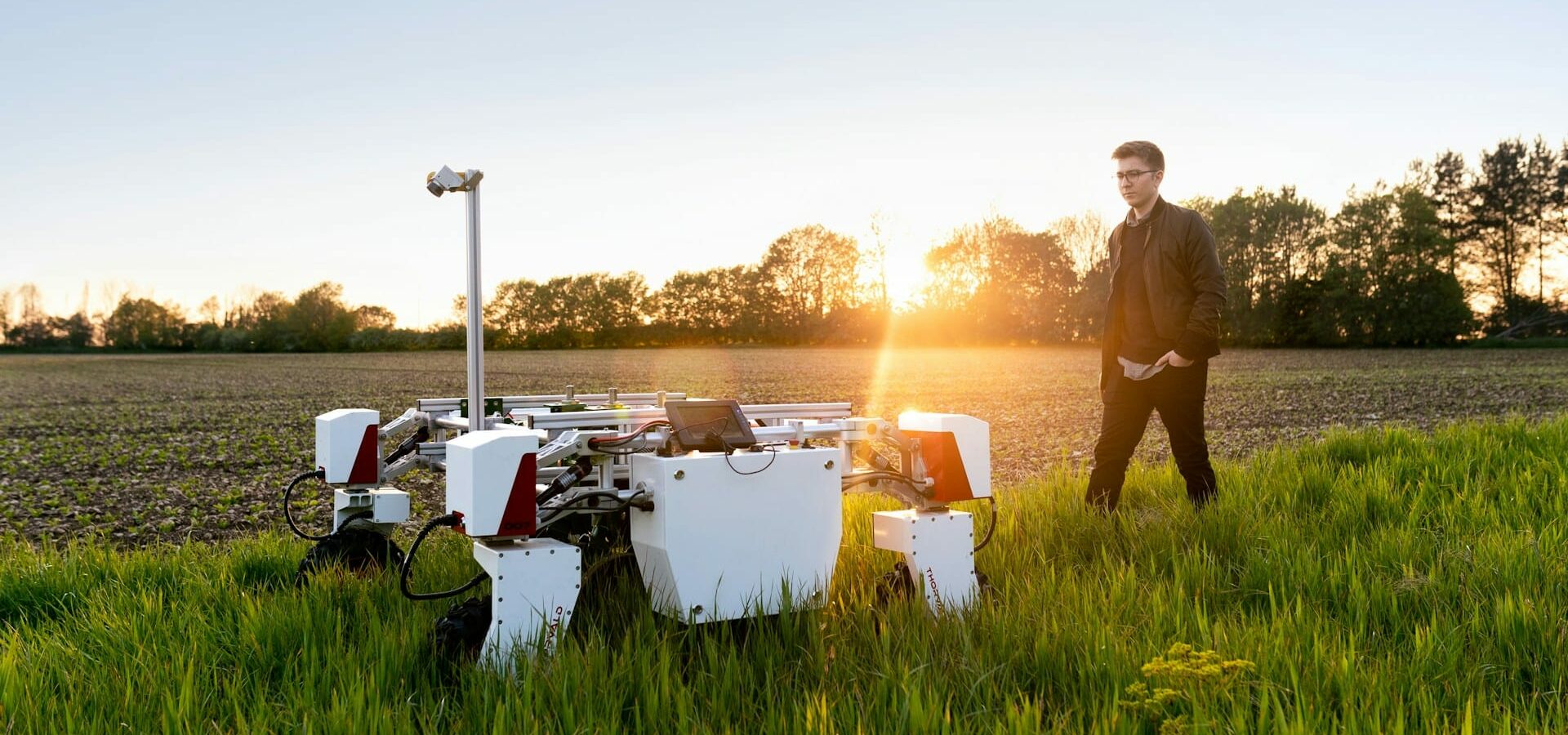
Food tech is shaking up the world of food with its disruptive innovations and intelligent technologies. We often talk about start-ups and gadgets, but there is one figure that really surprises us. The global food tech market reached $250 billion in 2022 and could climb to $500 billion by 2030. Yet this figure only reflects part of the upheaval underway. What is most striking is not just the size of the market, but the direct impact on the way we produce, buy and consume what we put on our plates.
Quick summary
| Awareness | Explanation |
|---|---|
| Food tech is redefining the food industry | This sector integrates technology and food to transform production and consumption. |
| Responses to environmental issues | Food tech offers sustainable solutions that minimise waste and optimise resources. |
| Agile and customised business models | Businesses are embracing flexibility and customisation through technology, improving efficiency and traceability. |
| Key innovative technologies | Precision agriculture, 3D printing, AI and biotechnology are revolutionising production and processing. |
| Ethical challenges to consider | These advances raise questions about acceptability, environmental impact and food equity. |
Food tech: definition and origins
Food tech is an innovative ecosystem where technology and food converge to radically transform our relationship with food production, distribution and consumption. This intersection between digital, science and gastronomy is shaping a new industrial paradigm that is fundamentally rethinking traditional food systems.
Origin and historical context
The origins of food tech date back to the 2010s, when the first technology start-ups began to take an interest in food issues. This movement was born of several critical factors:
- The need to respond to global environmental challenges
- The search for alternatives to conventional agriculture and food
- The explosion in digital technologies and artificial intelligence
The pioneers quickly realised that technology could provide innovative answers to global food issues such as food safety, sustainability and traceability.
Scope and components of food tech
Food tech is not a monolithic concept, but a dynamic ecosystem comprising several areas of innovation:
- Food production Vertical farming, urban farms, cell culture
- Transformation : 3D food printing, plant-based protein alternatives
- Distribution : Intelligent delivery platforms, blockchain-based traceability
- Consumption : Personalised nutrition applications, AI dietary recommendations
The size of the global food technology market was estimated at USD 202.62 billion in 2024 and should reach approximately USD 515.83 billion by 2034, expanding at a compound annual growth rate (CAGR) of 9.80% from 2025 to 2034.
The disruptive technologies in the food industry show that this revolution has only just begun, promising profound transformations in the way we produce, distribute and consume our food over the coming decades.
Why is food tech essential for the food industry?
Today, food tech is a major strategic lever for meeting the complex challenges of the modern food industry. More than just a technological trend, it represents a profound transformation of food production, distribution and consumption models.
Meeting environmental and sustainability challenges
Faced with the challenges of climate change and the depletion of natural resources, food tech offers innovative solutions for a more sustainable food supply:
- Optimising agricultural resources
- Significant reduction in food waste
- Development of less impactful production methods
These technologies make it possible to design more efficient food systems, minimising the carbon footprint and preserving biodiversity. All the more so when combined with agro-ecology.
Today's technologies are enabling a profound transformation in agricultural and industrial production methods:
- Predictive management : Anticipating agricultural yields and risks using artificial intelligence
- Precision agriculture : Using drones and sensors to analyse crop conditions in real time
- Automated monitoring : Intelligent systems for monitoring plant growth conditions
Transformation of business models
Food tech is reconfiguring traditional business models by introducing unprecedented agility and flexibility. It enables companies to :
- Customise your food offering
- Reduce production costs
- Improving product traceability
- Developing new distribution channels
This technological transformation could generate productivity gains of up to 30% in the food industry.
Innovation and food resilience
Food tech is becoming a real innovation accelerator, helping to meet the global challenges of food security and sovereignty. It offers concrete solutions such as :
- Alternative proteins
- Vertical farming
- Food preservation technologies
These technological developments are profoundly transforming our relationship with food, offering more sustainable, intelligent and resilient solutions.
Future prospects and challenges for food tech
Food tech is at a pivotal moment in its development, In the 21st century, technological innovations promise to profoundly transform our food ecosystem. This technological revolution is not just a trend, but a veritable systemic upheaval that calls into question our production and consumption models.
Ethical and environmental challenges
Technological innovations raise crucial questions in terms of their impact on society and the environment:
- Ethics of food production Acceptability of synthetic and laboratory-grown proteins
- Environmental impact Reducing the carbon footprint versus new technological constraints
- Food equity : Ensuring that new technologies are accessible to all segments of the population
These issues require a multidisciplinary approach that goes beyond technological considerations.
Economic and industrial transformation
Food tech will profoundly change traditional business models:
- Disruption of traditional agricultural and industrial sectors
- Emergence of new professions and skills
- Massive investment in research and innovation
Frequently Asked Questions
What is food tech?
Food tech refers to the innovative ecosystem where technology meets food, transforming food production, distribution and consumption through digital and scientific solutions.
What are the main areas of innovation in food tech?
Areas of innovation include food production (vertical farming, cell culture), processing (3D food printing), distribution (intelligent platforms) and consumption (nutritional advice applications).
How is food tech responding to environmental challenges?
It proposes solutions to optimise agricultural resources, reduce food waste and develop production methods that have less impact, thereby contributing to a more sustainable food supply.
What impact is food tech having on traditional business models?
Food tech is reconfiguring business models by providing greater agility, personalising food offerings and improving traceability, all of which can generate significant productivity gains.