



Spoiler on appetite control: if losing weight came down to eating less and moving more, the diet industry would have gone bankrupt long ago. Research is now revealing a long-underestimated player: your 100,000 billion intestinal bacteria. It controls satiety hormones, directs fat storage and predicts the response to weight-loss diets.
The «calories in / calories out» equation takes on water
Le microbiota finely modulates the secretion of the key hormones responsible for hunger (ghrelin) and satiety (GLP-1, PYY). From prebiotics such as inulin and oligofructoses increase the production of GLP-1 and PYY while curbing ghrelin - resulting in a measurable reduction in appetite and food intake in obese subjects and not obese.
The mechanism? The short-chain fatty acids (SCFAs) produced by the fermentation of fibres - acetate, propionate, butyrate - activate intestinal receptors that amplify the hormonal response to satiety. The bacteria don't just digest your fibre: they send signals to the brain to say «that's enough, put down that fork».
Fat storage: the microbiota also pulls the strings
In addition to appetite, the microbiota plays a role in the extraction of dietary energy and lipogenesis. Certain microbial profiles promote increased intestinal permeability, allowing pro-inflammatory compounds to pass to adipose tissue. The result: disruption of leptin signals and the onset of insulin resistance.
Functional metagenomics studies show that the microbiota's genetic capacity to transform fibre into absorbable sugars or SCFAs guides the host's energy balance. It is no longer so much the presence of a particular bacterium that counts, but the functions that the microbiota collectively expresses.
For formulators, this means a paradigm shift: targeting «functional signatures» rather than a few star strains.
The microbiota also speaks directly to the liver
While the intestine modulates hormones, inflammation and fat storage, it does not stop there: it maintains a real-time control dialogue with the liver via the portal vein. A study published in 2025 in Cell Metabolism has shown that certain metabolites produced by intestinal bacteria - in particular derivatives of the Krebs cycle such as mesaconate and itaconate - are given “priority” in the liver and the intestine. adjust insulin sensitivity and fat management.
Tested on liver cells, these compounds boost insulin signalling and modify the expression of key energy metabolism genes. In other words, the microbiota does more than just influence satiety, appetite or adipose tissue: it directly briefs the liver on how to orchestrate glucose and lipids. A missing piece that explains why, on an equivalent diet, two individuals can have radically different metabolic trajectories.
Akkermansia: the star that doesn't shine for everyone
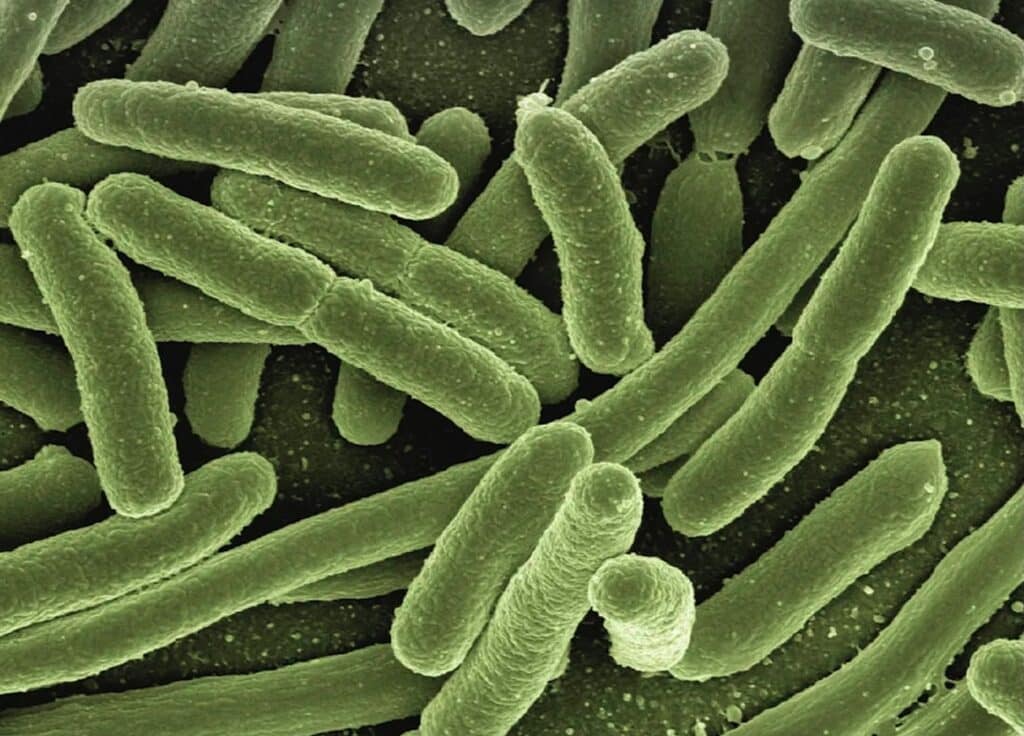
Among fashionable bacteria, Akkermansia muciniphila deserves its buzz. Its association with a better metabolic profile - less adiposity, better insulin sensitivity - is robust.
A recent double-blind clinical trial in overweight patients with type 2 diabetes showed that supplementation with A. muciniphila significantly reduces weight, visceral fat and HbA1c. But - and this is crucial - only in subjects with low initial levels of Akkermansia.
Strategic translation: we are entering the era of the precision probiotics. Effectiveness depends on the basic microbial profile. The same ingredient can be a game-changer for one consumer and an expensive placebo for another.
Why some diets fail (hint: ask the microbiota)
A study of over 100 adults involved in a weight loss programme revealed that success or failure was strongly associated with the functional characteristics of the microbiota - independently of baseline BMI.
The microbiota of the «good responders» showed high bacterial growth and more genes linked to cell biosynthesis. The «resistant» microbiota? Enriched with energy-extraction genes - in other words, bacteria that are champions at extracting the maximum number of calories from every mouthful.
For the B2B industry, this data opens the door to «ingredients + data + services» offers: microbiome analyses, personalised recommendations, targeted formulations.
Table - Microbiota levers for weight and appetite management
| Microbiota lever | Key mechanism | Possible ingredients | Scientific degree |
| GLP-1 / PYY stimulation | Increased satiety via intestinal hormones | Inulin, FOS, fermentable fibres | High (human clinical studies) |
| Ghrelin modulation | Reducing hunger | Targeted prebiotics, some postbiotics | Average (convergent data) |
| Intestinal permeability | Less inflammation, better insulin sensitivity | Akkermansia, Bifidobacterium, butyrate | Medium to high |
| Reorientation of energy metabolism | Less storage, more lipid oxidation | Fibre blends, AGCC | Emerging |
| Precision probiotics | Effectiveness depends on basic profile | Akkermansia targeted, consortia defined | Confirmed for certain strains |
What ingredient suppliers can do now
- New-generation prebiotics. Fibres selected to maximise the production of SCFAs and GLP-1/PYY stimulation. The criterion is no longer «feed the right bacteria» but «generate the right metabolites».
- Metabolic probiotics. Akkermansia, selected strains of Bifidobacterium and Lactobacillus targeting inflammation, insulin sensitivity and intestinal permeability. The pasteurised form of Akkermansia opens up interesting options in terms of stability.
- Postbiotics and purified metabolites. Acetate, butyrate, tryptophan derivatives - we bypass the variability of the microbiota by delivering the signal directly. A «plug and play» approach that is winning over formulators.
- Stratification services. Documenting efficiency according to the basal level of Akkermansia or the richness of fermentation genes will become a major competitive advantage.
In a nutshell:

FAQ : Microbiota, appetite and fat storage
- Does the microbiota alone explain weight gain? No. It's one factor among others (diet, activity, genetics, sleep). But it does modulate the individual response to the same diet, in particular via appetite and calorie extraction. Two people eating the same thing can have different energy balances depending on their microbiota.
- Which strains are the most promising? Akkermansia muciniphila has the most solid human data on weight, visceral fat and glycaemia - but in specific sub-groups. Bifidobacterium and Lactobacillus remain strategic, with their effects highly dependent on the strain and the food context.
- Can «weight loss» or «appetite reduction» effects be claimed in Europe? Not directly. Health claims are still strictly regulated, and few claims on probiotics have been authorised. Realistic strategies focus on intermediate benefits: satiety, digestive comfort, energy metabolism.
- What kind of research do B2B customers expect? Randomised clinical trials with stratification according to baseline microbiota, relevant metabolic criteria (weight, waist circumference, HbA1c) and detailed characterisation of strains. The integration of multi-omics data is becoming a guarantee of credibility.
- How can you differentiate yourself in this market? Quality of clinical evidence, mechanistic demonstration (hormones, AGCC, permeability), integration of microbiome data, and co-construction of personalised solutions with brands. Partnerships with profiling platforms will be key.
References:
- Gut microbiota and appetite regulation, PMC, 2024. PMC
- Microbiota in obesity and metabolic health, ScienceDirect, 2023. ScienceDirect
- Gut microbiome and metabolic disorders, Frontiers in Endocrinology, 2024. Frontiers
- Akkermansia muciniphila supplementation in T2D, Cell Metabolism, 2024. ScienceDirect
- Gut microbiome predicts weight loss response, mSystems, 2021. ASM Journals
- Portal veno-enriched metabolites as intermediate regulators of the gut microbiome in insulin resistance, Cell Metabolism, 2025. ScienceDirect | PubMed
- FAPESP, «Metabolites produced in the intestine play a central role in controlling obesity and diabetes», 2025. Agência FAPESP
- Metabolomics Workbench, project ST004133, 2025. Metabolomics Workbench