

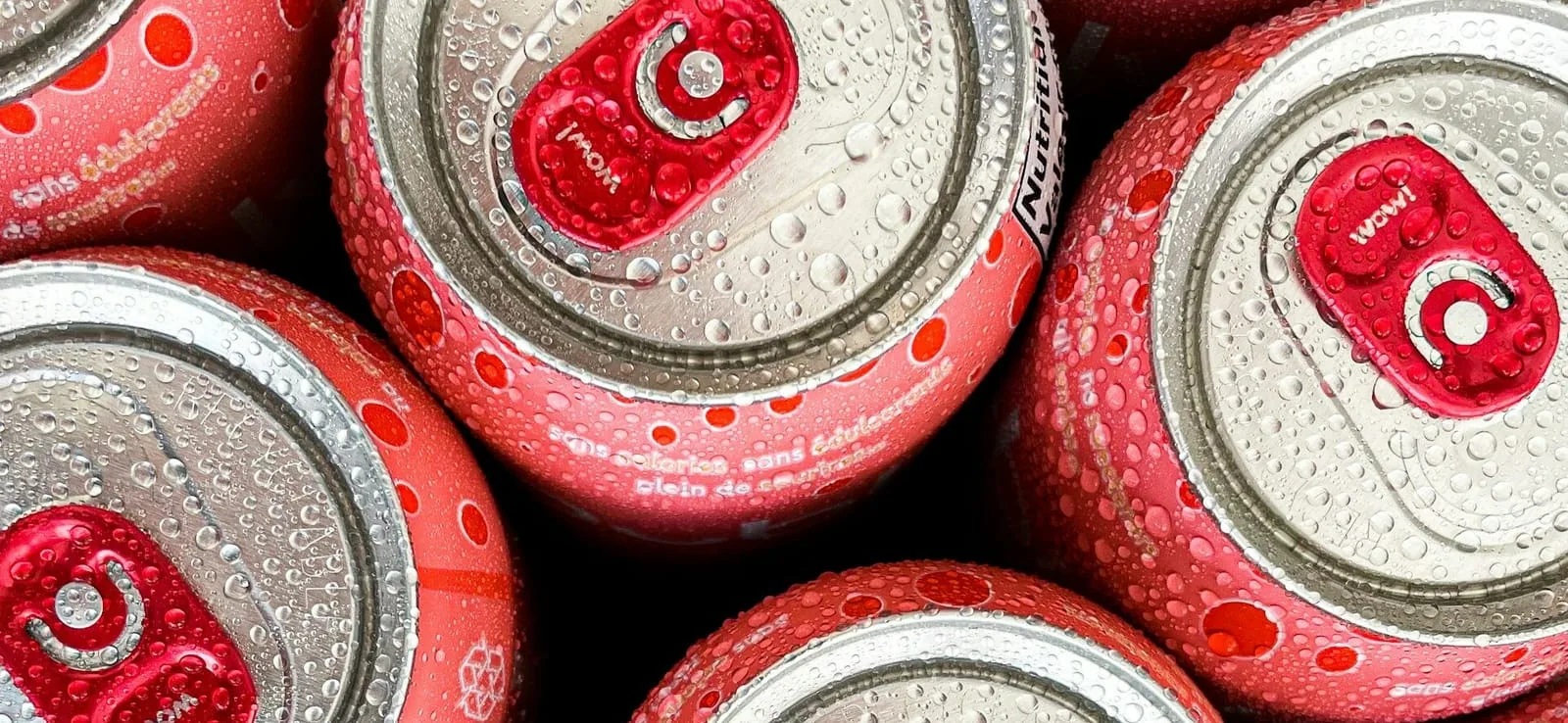
The launch of Pepsi Prebiotic Cola by PepsiCo marks a decisive turning point in the functional soda war, revealing a calculated strategy of entry into a market valued by pioneering players. This initiative is part of a post-acquisition vertical integration strategy, a few months after the acquisition of Poppi for nearly 2 billion dollars.
Analysis of the ingredients reveals a technically mastered formulation: 3 grams of prebiotic fibre, 5 grams of cane sugar, 30 calories and no artificial sweeteners. This composition positions the product in the premium segment of functional sodas, exploiting the expertise acquired through Poppi while capitalising on the equity of the Pepsi brand.
Official launch video
Innovating ingredients as part of a differentiation strategy
The selection of cane sugar as a sweetening agent is a clever technical and marketing move. This decision responds to three strategic imperatives:
- Taste differentiation : The organoleptic profile of cane sugar offers greater aromatic complexity than high fructose corn syrup, meeting the sensory expectations of premium consumers.
- Clean label« positioning» : Avoiding artificial sweeteners is in line with regulatory trends and industry concerns about consumer acceptability.
- Contextual opportunity Timing: The timing coincides with President Trump’s statements favouring cane sugar formulations over corn syrup, creating a favourable momentum.
Having said that, let’s not forget that cane sugar provides just as many calories as beet sugar or corn syrup…
Competitive analysis of prebiotic soda: a red ocean disguised as innovation
The prebiotic soda ecosystem already has significant competitive saturation. Brands such as Olipop, SunSip, Culture Pop, Wildwonder and Simply Pop (Coca-Cola) already occupy this space with comparable formulations.
The nutritional benchmark reveals technical parity:
- Pepsi Prebiotic Cola 5g sugar, 30 calories, 3g prebiotic fibre
- Poppi 5g sugar, 25 calories, 2g prebiotic fibre
- Simply Pop 10g sugar, 60 calories
This homogenisation of nutritional profiles shifts the competition towards other levers: distribution, pricing and brand equity.
Distribution strategy: betting on mainstream accessibility
Positioning in the traditional soda aisle rather than in the «modern soft drinks» section reveals a strategy to democratise functional soft drinks. This approach aims to capture consumers who are not familiar with health alternatives, exploiting the familiarity of the Pepsi brand as a vector for adoption.
This distribution tactic offers a number of competitive advantages:
- Cognitive accessibility Reducing psychological barriers to purchase for mainstream consumers
- Halo effect transferring Pepsi credibility to the functional category
- Potential volume access to a wider consumer base than the current niche segment
Innovation or adaptation? The strategic equation
The fundamental question concerns the real nature of this initiative: is it a «category-defining innovation» or a «heavyweight entering a category established by pioneering players»?
The evidence-based analysis suggests a hybrid strategy:
- Incremental innovation optimised prebiotic fibre (3g vs 2g at Poppi) and cane sugar formulation
- Strategic adaptation exploitation of acquired assets (Poppi R&D) and the PepsiCo distribution network
- Positional disruption transforming a niche segment into a mainstream category
Sector outlook: B2B implications
This initiative is a catalyst for a number of structural trends:
- Vertical consolidation The giants are integrating innovation via acquisition rather than in-house development
- Functional democratisation migration of premium ingredients to the mass market
- Competitive restructuring Pressure on pure players through the volume effect of the majors
For suppliers of functional ingredients, this development opens up opportunities for industrial scale, while at the same time intensifying the pressure on costs and quality standardisation.
Conclusion: innovation… en masse
The launch of Pepsi Prebiotic Cola illustrates thehe growing maturity of the functional soft drinks market and its transition from a phase of pure innovation to one of mass production. This transition poses major strategic challenges for established players and redefines the rules of competition in the sector.
This is about more than just product innovation: it’s about transforming an emerging segment into a structured category, with the resulting regulatory, technological and commercial implications for the entire B2B ecosystem.
Sources
- FoodNavigator-USA, 22 July 2025: Is Pepsi Prebiotic Cola a game-changer or just late to the game?
- MediaPost, 22 July 2025: Pepsi Launches Prebiotic Cola