



On 1 October 2025, Amazon made official the launch of Amazon Grocery: a private label with more than 1,000 food products, most of them priced at under 5 dollars. Far from being a simple marketing stunt, this strategic offensive reveals the Seattle-based giant's ambitions in the food sector - and heralds unprecedented pressure on the entire value chain, from ingredient suppliers to traditional retailers.
Amazon Grocery: the anatomy of a pricing offensive
Consolidating brands under a single banner
Amazon is unifying its existing Happy Belly and Amazon Fresh brands under the Amazon Grocery banner, creating a consistent identity for its private label offering. The range now covers more than 1,000 items: dairy products, fresh meat and fish, fruit and vegetables, snacks and essential for pastry-making.
The positioning is unequivocal. Jason Buechel, vice-president of Amazon's global grocery division, says he wants to offer quality products without compromising on taste, at competitive prices that allow consumers to optimise their food budget.
The context: a grocery business in search of coherence
This announcement comes against a backdrop of major restructuring. Amazon recently announced the closure of all its Fresh shops in the UK, while expanding its same-day delivery service for fresh produce into new areas of the US. The message is clear: Amazon is focusing on e-commerce and optimised logistics rather than physical retail.
This initiative is not a first: Amazon already launched a budget brand called Amazon Saver in September 2024. Amazon Grocery seems to be version 2.0, more ambitious and better structured.
Strategic deciphering: Amazon's three levers Grocery
1. Capture the price-conscious customer base
In a persistent inflationary environment, consumers are making choices. Amazon is playing to the wallet's heartstrings by proposing a simple equation: quality + low price + practicality. For ingredient suppliers, this means one thing: the battle will be fought to optimise formulation costs.
2. Transforming the logistics trial
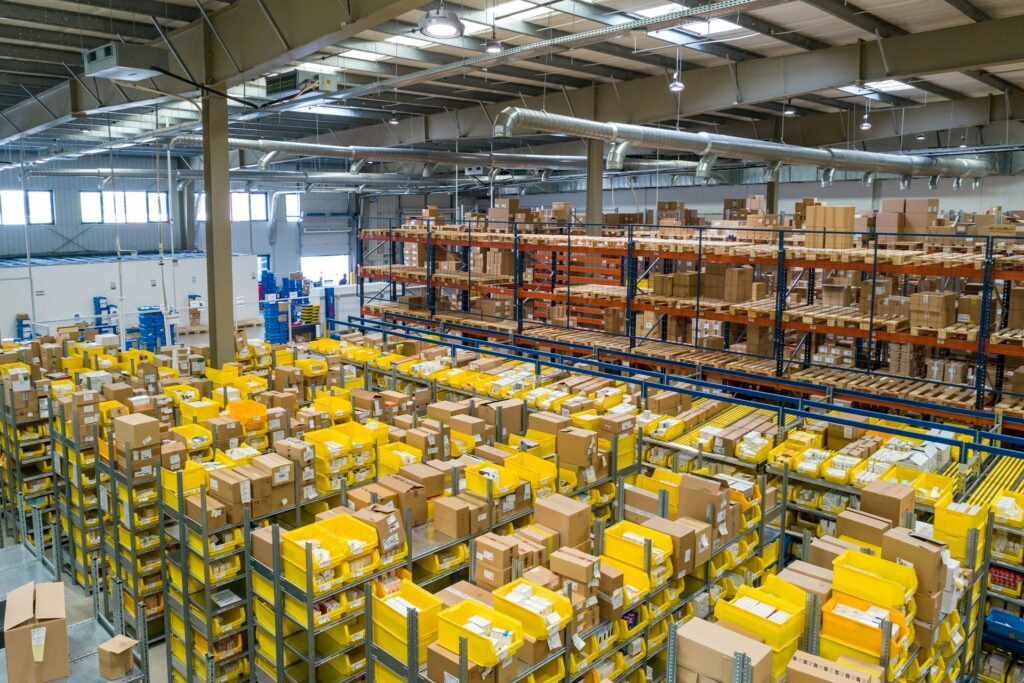
Amazon's real challenge is not to sell pasta for 3 dollars, but to deliver fresh salmon in less than 24 hours without exploding its operating margins. This ambition requires :
- A highly optimised supply chain (demand forecasting, waste reduction)
- Formats and packaging adapted to long-distance transport
- Close partnerships with producers and processors
For those involved in the food industry, the question is: Are you able to supply ingredients or semi-finished products that are compatible with these extreme logistical constraints?
3. Exert maximum competitive pressure
With this price offensive, Amazon is forcing its competitors - Walmart, Costco, Target, and in Europe Lidl, Aldi and Carrefour - to react. Retailers will either have to squeeze their own margins, strengthen their private labels or focus on differentiation (organic, local, premium). In all cases, suppliers will be approached for lower-cost reformulations or value-added innovations.
Implications for you: opportunities and areas of turbulence
Opportunities to seize
Volume and visibility
Becoming an Amazon supplier means potentially accessing considerable volumes. Players capable of offering raw materials or functional ingredients at controlled cost (texturisers, alternative proteins, fibres, sweeteners) could win key contracts.
Cost-effective innovation«
The challenge is no longer just to innovate, but to innovate intelligently: to propose solutions that reduce the final cost without sacrificing perceived quality. Here are some concrete examples:
- Textured vegetable proteins to partially replace meat
- Prebiotic fibres to improve nutritional value at low cost
- Ferments or enzymes to extend shelf life without controversial additives
Co-development and strategic partnerships
Amazon could seek to vertically integrate certain supply chains or co-develop proprietary formulations with specialist biotech and food-tech companies. Agile players, able to adapt quickly to Amazon's specifications, will be one step ahead.
Anticipating the risks of Amazon Grocery
Brutal price pressure
If Amazon imposes floor prices, suppliers will have to absorb part of the squeeze or lose the contract. Margins - already under pressure in the food industry - are likely to melt like snow in the sun.
Customer dependency
Working with Amazon can be a double-edged sword: too much volume concentrated on a single customer creates structural fragility. If Amazon decides to change supplier or reformulate its products, the impact can be violent.
Operational and regulatory requirements
Amazon will accept no deviation: impeccable traceability, strict regulatory compliance (FDA, EFSA depending on the market), consistent quality, tight deadlines. Less structured SMEs may not be able to keep up.
Expected market reactions: likely scenarios
Traditional distributors will fight back
Expect to see :
- Massive expansion of budget private labels at Walmart, Carrefour and Aldi
- Aggressive communication campaigns on «made local» or «support for producers».»
- A frontal price war on basic products (milk, eggs, bread, pasta)
Brand manufacturers will have to reinvent themselves
The big brands (Nestlé, Unilever, Danone, Mondelez) can't play the low-price game. Their salvation will come through :
- Differentiating innovation (clean label, health functionality, premium formats)
- The consumer experience and storytelling
- Partnerships with specialist retailers (organic, delicatessens, niche e-commerce)
Ingredient suppliers will have to choose sides
Faced with this reconfiguration, three strategic positions are emerging:
| Posture | Description | Profile |
| The cost killer | Extreme optimisation, high volumes, low margins | Major industrial groups, commodities |
| The differentiator | Added-value ingredients, innovation, premium | Biotech, food-tech, specialists |
| The tightrope walker | Mixed portfolio: volume + value | Agile mid-market players |
Three questions every B2B player needs to ask themselves today when faced with Amazon Grocery
1. Does my cost structure allow me to remain competitive in a market where Amazon dictates prices?
If the answer is no, it's time to review your processes, your sourcing and your formulations.
2. Am I capable of meeting the logistical and quality requirements of a giant like Amazon?
Traceability, deadlines, compliance: these issues are no longer optional. They are vital.
3. What is my differentiation strategy if the price war intensifies?
Organic, health, sustainability, innovation... Choose your playing field and invest heavily in it.
Outlook: towards a polarisation of the food market
The launch of Amazon Grocery is not an isolated event. It is part of an underlying trend: the polarisation of the food market between a highly price-competitive offering and a premium/healthy/sustainable offering.
For players in the ingredients industry, this means that they will have to choose their positioning lucidly - and assume it fully. Hybrid or vague strategies will be punished by the market.
In the medium term, we can expect :
- Consolidation of players unable to keep pace
- Faster innovation in value-added segments
- A reconfiguration of alliances between producers, processors and distributors
To sum up: Amazon is not revolutionising the food market. It is simply forcing all the players to ask themselves the right questions - and to answer them quickly.
6 questions you may have about Amazon Grocery (and their straightforward answers)
Will Amazon become a must for ingredient suppliers?
Not necessarily. Amazon represents a volume opportunity, This is not a strategic inevitability. Suppliers who choose to work with Amazon must accept its conditions (price, lead times, traceability) and not put all their eggs in one basket. Customer diversification remains the golden rule. On the other hand, it would be naive to ignore Amazon completely: even if you don't work directly with them, your competitors might.
How do you negotiate with Amazon without having your margins squeezed?
Three levers to pull: (1) differentiating innovation (suggest an ingredient or formulation that Amazon won't find elsewhere), (2) logistical efficiency (adapted formats, optimised packaging, impeccable traceability) and (3) contractual flexibility (progressive volumes, review clauses). And above all: know your break-even point to the decimal point. If Amazon pushes too hard, have the courage to say no. An unprofitable contract is a millstone around your neck, not a victory.
Are premium and organic brands doomed by this price war?
On the contrary: they are becoming more necessary than ever. The polarisation of the market is creating two distinct universes. On the one hand, the discount (Amazon Grocery, hard discount private labels). On the other, the justified premium (organic, clean label, local, functional). Players who try to play the middle ground - neither truly premium, nor truly competitive - risk being crushed. Organic and health products have their cards to play, as long as they don't compromise on their positioning and know how to tell their story.
Will Amazon Grocery arrive in Europe with the same aggressive approach?
Probably, but not immediately. The European market is more fragmented and regulated, and consumer habits differ. Amazon will have to deal with stricter regulations (EFSA, national labels, short distribution channels), powerful local players (Lidl, Aldi, Carrefour) and a strong awareness of «made in Europe». Nevertheless, it would be a mistake to underestimate Amazon. Their ability to adapt and their appetite for market share should never be overlooked.
Which ingredient sectors are most likely to suffer?
The facilities (sugars, flours, basic oils, standard additives) are on the front line, with low differentiation, high substitutability and head-on cost wars. Conversely, high value-added segments - such as sugar, flour, basic oils and standard additives - are at the front of the queue. alternative proteins, prebiotics, probiotics, functional ingredients, nutraceuticals - have greater room for manoeuvre. If your catalogue is limited to commoditised raw materials, now is the time to think about moving upmarket or consolidating strategically.
What can SMEs do about this concentration of purchasing power?
Not to play Amazon's game, but to create their own playground. SMEs will never win on volume or low prices. Their strength lies in agility, innovation, proximity and co-construction with niche customers. Winning strategies: partnerships with specialist distributors (organic, bulk, short distribution channels), development of tailor-made solutions for premium brands, investment in R&D to create patented or exclusive ingredients. And above all: cultivate your difference as a strategic asset, not a handicap.
References
- CNBC (1 October 2025): Amazon launches ‘price-conscious’ grocery brand with most products under $5
- BusinessWire (1 October 2025): Official Amazon press release
- Food & Wine (2025): Inside Amazon's New Private Label Grocery Line
This article reflects an independent analysis based on public sources and does not constitute investment or business strategy advice.