



By 2025, yeast oil from fermentation will be the drop-in alternative to palm oil, with comparable functional performance, a deforestation-free chain, better EUDR alignment, and a scale-up supported by NoPalm Ingredients and NIZO Food Research. Under regulatory (EUDR), reputational and climatic pressure, the food industry is looking for lipids that are traceable, stable and competitive. Oleaginous yeast fermentation adds value to agro-industrial by-products to produce substitutable functional oils without heavy reformulation - with a B2B focus on technology, impact, compliance and operational integration.
Why get out of palm oil now?
Present in more than 50 % of the processed products, Palm remains hard to match for stability, plasticity and cost. But its link with deforestation exposes brands to image and compliance risks. L’EUDR (coming into force in 2023, applicable by the end of 2025) requires greater diligence: proof of no deforestation, plot geolocation, documentary traceability. At the same time, the studies cited by the players in the sector indicate a consumer preference for alternatives perceived as being more environmentally friendly, and emission factors significantly lower for fermented oils (on a comparable LCA basis). The pivot is becoming strategic for the Purchasing, R&D and AR/QA departments.
The technological promise: oil yeast fermentation
NoPalm Ingredients (in the Netherlands) uses non-GMO yeast accumulating up to ~60 % of lipids. The process follows four stages : fermentation (brewery type), double drying, solvent-free extraction. Inputs : agro-industrial co-products (whey permeate, molasses, potato residues), anchoring the model in the’circular economy and limiting capex (using existing equipment).
Visit February 2025, an industrial milestone has been reached at 120 000 L ; in September 2025, partnership with NIZO Food Research structure a demonstration plant (Ede, NL) integrating upstream/downstream. Initial announced capacity : hundreds of tonnes, with a trajectory towards ~1,200 t/year by 2027-2028.
Yeast oil has a drop-in“ function, meaning that it can be substituted for palm oil as it is. By modulating temperature and pH, the profiles of fatty acids mimic average palm fractions, with thermal stability and texture adapted to bakery, confectionery, margarine shop. Objective : substitute without heavy reformulation. The tests reported indicate a functional equivalence on target uses.
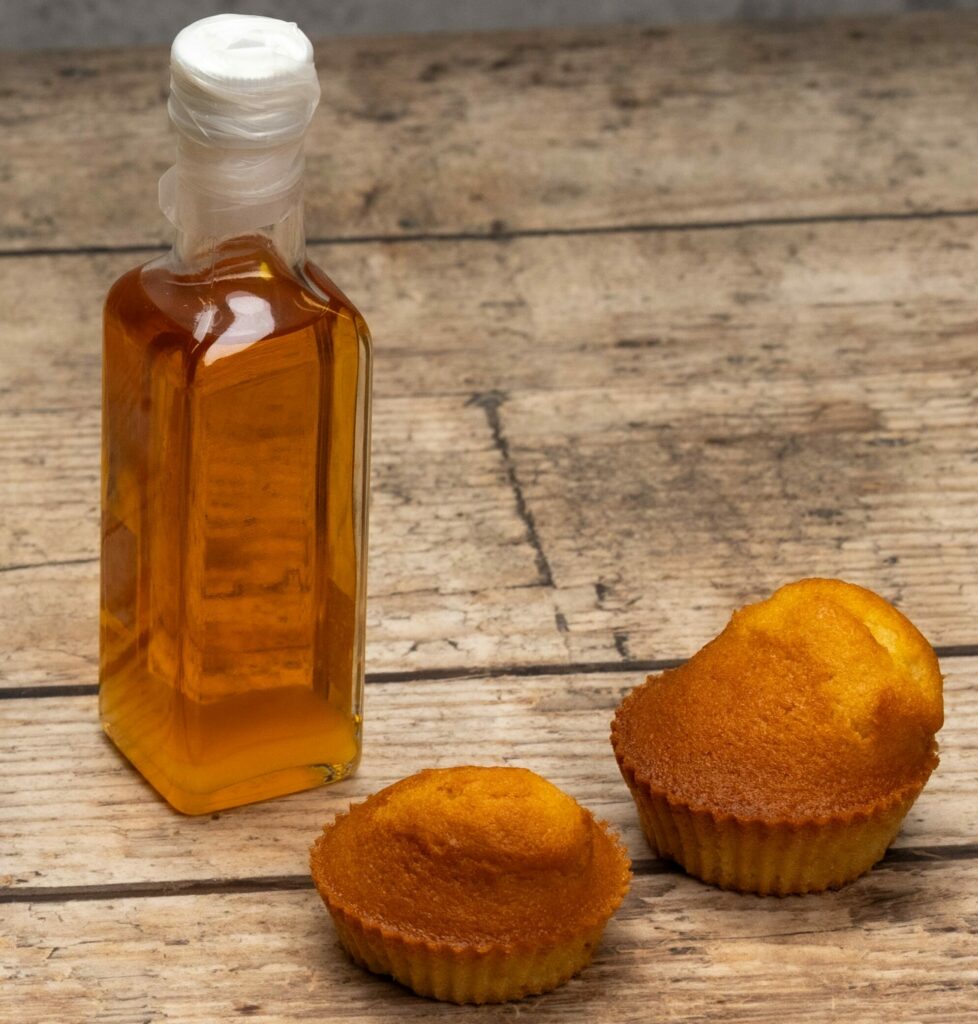
B2B impacts of yeast oil
- Compliance & traceability. Channel deforestation-free, traceability co-products → lipids, better alignment with’EUDR and complementary to RSPO approaches.
- Economy & supply. Target price parity (or even green discount“) via inexpensive inputs, local loops and supply contracts. The agreement NoPalm × Milcobel (Sept. 2025) illustrates the conversion of whey permeates into functional lipids.
- Perception & differentiation. “Palm oil free”remains a legible signal for the European market. Documented positive acceptance if organoleptic parity and controlled price.
- Quality & safety. Controlled production, stable specifications ; the need to validate by application (oxidation, melting point, crystallisation, shelf-life).
The challenges of yeast oil (and how to deal with them)
- Industrialisation. Going from pilot to continuous requires long campaigns and replicability multi-substrate. The demo plant aims to de-risk before commercial deployment.
- Regulatory. In Europe, substantial equivalence possible depending on matrix/use; in the USA, Self-affirming GRAS depending on composition and use. Check on a case-by-case basis (nomenclature, countries, claims).
- Input sourcing. Flexibility (potatoes, whey, molasses) for anchor locally and reduce logistics ; provide plans B (variability, seasonality).
Outlook for 2026-2028
First commercial capabilities targeted : ~6,000-10,000 t/year, via regional hubs and application extensions. At the same time, other alternative lipids (insects, C1/C2, microbial platforms) are making progress. The advantage will go to players capable of multisourcer, standardising specs and locking in compliance.
FAQ - Questions your teams are already asking
Is yeast oil really drop-in?
For target uses (bakery, confectionery, margarine-making), tests show a functional equivalence. Always qualify by matrix (processes, fatty acid profiles, crystallisation).
What is the cost vs palm impact?
The target is the parity (or even a green discount) as capacity and local loops increase. Final costs depend on inputs and logistics.
What about the EUDR?
Channel deforestation-free and traceable. Provide a evidence file (contracts, invoices, geolocation, audits, LCA if available) to reach the cut-off by the end of 2025.
What about labelling (RSPO, etc.)?
Yeast oil complete or replaces the RSPO approach according to your strategy. The central argument remains no deforestation and traceability.
Is there a nutritional impact?
The profile is aimed at functionality (textures/blending points); the fatty acid composition can mimic palm fractions. Nutritional positioning at document by application.
Which raw materials should be favoured in Europe?
By geography : whey permeates, potato residues, molasses. The aim is to minimise transport and secure supply.
Realistic substitution deadlines?
Visit 3 months for two structured pilots (from first audit to go/no-go), then 6-12 months for a gradual switch to a prioritised portfolio.
Conclusion - Moving from rhetoric to evidence
Yeast oil ticks all the key boxes: performance, traceability, EUDR compliance, small footprint. 2025-2026 is the window for test, standardise and contract without disrupting your lines.
What about you? Have you identified 2 pilot applications that you would like to launch within the next 90 days?
Reference
NoPalm Ingredients (public information, 2025) - https://www.nopalm-ingredients.com/