


Not all ultra-processed plant products are created equal: according to two recent INRAE studies published in The Lancet Regional Health - Europe, However, their impact on health depends very much on the level of processing and the actual nutritional profile, rather than simply on the fact that they are “plant-based”. So plant-based processing has its limits…
Plants are the way forward, but at what nutritional cost?
With sales of plant products jumping by more than 20 % in Europe between 2020 and 2024, the question of their real nutritional quality is a must. Behind the boom in veggie burgers, A paradox is emerging: not all of them offer the health benefits that consumers spontaneously associate with “plants”.
The INRAE, through two successive studies, is exploring in detail the impact of the level of transformation of plant-based foods on the health of French consumers.
Why measure the level of plant transformation?
Since the classification NOVA, used by the WHO and the FAO, food is divided into four levels according to the degree of processing:
- Raw or minimally processed foods (fruit, vegetables, pulses, seeds, homemade tofu)
- Processed culinary ingredients (oils, flours, syrups, salt)
- Processed products (wholemeal bread, preserves, smoked tofu, simple dishes)
- Ultra-processed foods (UPF) (veggie burgers, snacks, protein bars, fortified drinks)
This typology, applied here to vegetable products, distinguishes useful processing - that which ensures safety and preservation - from excessive processing, often associated with nutritional losses and the addition of technological additives.
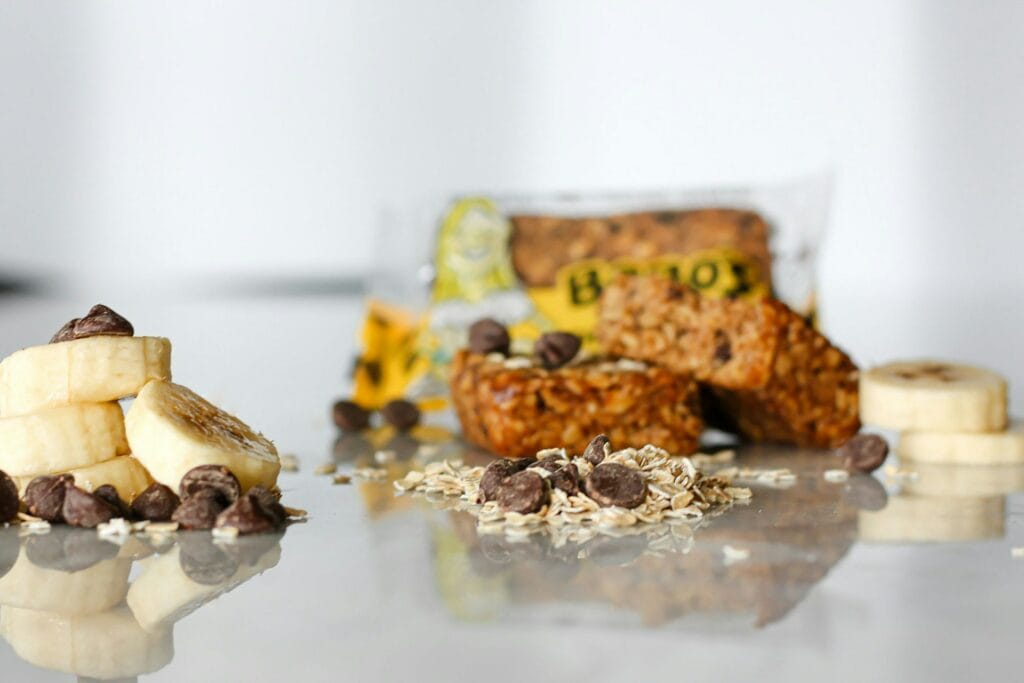
INRAE’s objective was to clarify a persistent lack of clarity: are ultra-processed plant products better, worse or simply different from animal products? ultra-processed ?
What the INRAE study shows: not all plant products are created equal
The team at Benjamin Alles and Clémentine Prioux (INRAE, Paris) analysed the consumption of over 100,000 French adults, using the NutriNet-Santé cohort. Result: the share of ultra-processed plant foods in the diet varies greatly according to dietary and socio-economic profiles.
Key findings:
- Consumers who eat a predominantly plant-based diet have better overall nutritional quality (less saturated fat, more fibre and micronutrients).
- But within these plant systems, a high consumption of products ultra-processed (burgers, ready-to-eat meals, enriched desserts). associated with a less favourable metabolic profile excessive intake of free sugars and sodium, increased energy density.
- Conversely, a plant-based diet based on minimally processed foods (pulses, seeds, wholegrain products) has the following advantages expected positive effects on weight, blood pressure and cholesterol.
In other words: plants are no guarantee of quality. It’s the level of transformation that makes the difference.
Table: simplified typology according to the NOVA classification applied to plant products
| NOVA level | Examples | Key features | Estimated nutritional impact |
| 1 - Lightly processed | Lentils, chickpeas, home-made tofu | Rich in fibre, protein and low in additives | Very favourable |
| 2 - Culinary ingredients | Vegetable oils, flours, rice syrup | Source of energy, partial loss of nutrients | Neutral to moderate |
| 3 - Transformed | Wholemeal bread, preserves, smoked tofu | Addition of salt, heat, fermentation | Moderately favourable |
| 4 - Ultra-processed | Veggie burger, protein snack, flavoured veggie drink | Additives, isolates, extrusion, texturing | Varies according to recipe: from neutral to unfavourable |
Implications for players in the plant and ingredients sectors
1. Differentiation through reasoned transformation
These results open up an area of strategic innovation: the “low processed vegetable. Manufacturers can add value to smooth processes (cold texturing, fermentation, limited extrusion) as an argument for naturalness and nutrition.
2. Rethinking the wording
INRAE studies suggest that negative metabolic effects do not come from the plant itself, but from the over-composed matrices. As a result:
- limit the use of isolates and modified starches,
- Favour complete proteins and native fibres,
- reduce texturising agents and flavourings.
3. Communicating transparently about plant processing
Plant-based marketing is no longer enough brands must demonstrate how their processes preserve nutritional quality. In a context where European Commission is working to harmonise nutritional profiles and “natural” claims, making transparency a key competitive factor.
4. Towards an industrial indicator
This work could inspire the creation of a index of reasoned transformation (ITR) a KPI combining NOVA score, nutritional density and environmental footprint, which can be used by B2B players to compare formulations.
Towards reasoned and transparent plant processing
The INRAE’s conclusions are an invitation to look beyond simplistic oppositions. Yes, plants can be a lever for public health and sustainability, provided that the transformation serves nutrition and not the other way round.
For manufacturers, this means reinventing value chains:
- from the field to the extruder, controlling each denaturation stage; ;
- document the effects of processes on amino acids, fibres and micronutrients; ;
- training R&D teams in “positive processed nutrition”.
Consumers will continue to look for meaning and trust. Between perceived naturalness and technological performance, The challenge for plants is now one of balance.
And you, how does your company measure the level of plant-based transformation of its products?
FAQ
**What is an ultra-processed plant product according to the NOVA classification?
**These are industrial foods made up of refined ingredients, protein isolates, texturisers and additives, often derived from complex processes (extrusion, recomposition). Examples: vegetable steaks, protein bars, flavoured drinks.
**Are ultra-processed plant products always less healthy?
**Not necessarily. Some maintain a correct nutritional profile, especially if they use moderate processes and natural ingredients. It’s the combination formulation + process + nutritional density which determines the real impact.
**How can the industry reduce the level of processing?
**By focusing on gentle processes, the fermentation, the cold texturing and complete matrices. These approaches improve sensory quality while limiting nutritional losses.
References
- Alles B. et al, The Lancet Regional Health - Europe, 2024, DOI: 10.1016/j.lanepe.2024.100948
- Prioux C. et al, The Lancet Regional Health - Europe, 2025, DOI: 10.1016/j.lanepe.2025.101470
- INRAE, Press release, 2025 - Plant product processing and health