


A PREDIMED-Plus study, published in Annals of Internal Medicine, shows that a small, structured adaptation of the Mediterranean diet (with calorie reduction, moderate physical activity and support) reduces the risk of type 2 diabetes by 31 % in overweight people with metabolic syndrome - a solid conclusion validated by the largest European nutritional study.
The Mediterranean diet is often promoted as a means of preventing type 2 diabetes. But this lifestyle, with no precise guidelines, may not be enough to prevent the disease. A team of researchers from PREDIMED-Plus and the Harvard T.H. Chan School of Public Health, added three simple levers - calorie restriction, physical activity and professional support - to create a more structured approach. The result? A marked reduction in the risk of developing diabetes, confirmed over six years - with measurable, balanced and applicable effects.
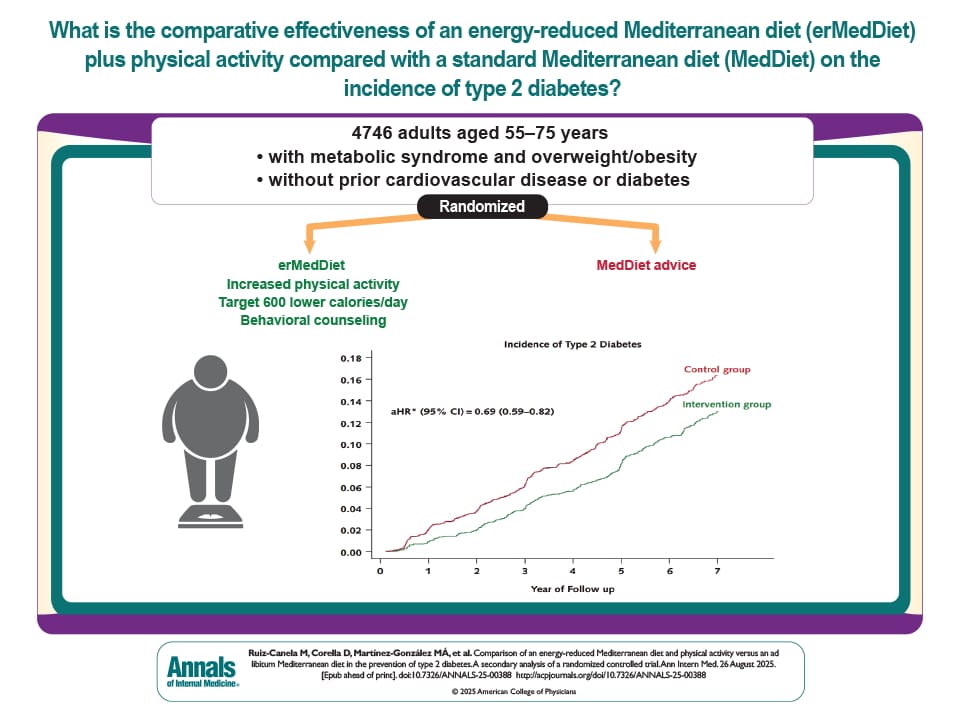
PREDIMED-Plus, this major European clinical trial, has broken down the following results 4,746 participants (55-75 years old, overweight or obese, with metabolic syndrome, but without diabetes) into two groups:
- Intervention group A reduced-energy Mediterranean diet (-600 kcal/day approx.), moderate physical activity (brisk walking + strengthening/balancing exercises), and professional support.
- Control group A «free» Mediterranean diet with no instructions on calories, exercise or support.
After six years, the intervention group had seen their risk of developing diabetes reduced by 31 % (confidence interval not indicated in the summary, but the effect is solid). At the same time, they lost an average of 3.3 kg (compared with 0.6 kg in the control group) and reduced their waist circumference by 3.6 cm (compared with 0.3 cm).
Everyday prevention of type 2 diabetes is simple with a boosted Mediterranean diet
It shows that prevention can be achieved through simple adjustments that can be incorporated into everyday life - there’s no need for extreme diets or high-tech interventions. The dietician or health professional can recommend:
- A slightly lower calorie intake, realistic over time; ;
- Regular moderate physical activity; ;
- Support to make it a habit.
It’s pragmatic, measurable, and above all effective over the long term for patients at risk (overweight, obese, with metabolic syndrome). As a reminder, the Mediterranean diet is based on the following principles:
- Food foundations The Mediterranean diet is based on a predominant consumption of plant-based foods. Fruit, vegetables, pulses, nuts and wholegrain cereals form the basis, providing fibre, micronutrients and a moderate energy density.
- Fat quality Extra-virgin olive oil is the main source of fat, rich in monounsaturated fatty acids and polyphenols. It is associated with a reduction in cardiovascular risk and documented anti-inflammatory effects.
- Animal proteins in moderation Eating fish and seafood several times a week is encouraged for their omega-3 (EPA/DHA) content. Poultry and fermented dairy products (yoghurt, cheese in moderate quantities) complete the protein intake. Red meat and cold meats are only occasionally eaten.
- Protein-plant model : Legumes play a central role, both as a source of energy and as a source of protein. of plant proteins their favourable glycaemic index and their impact on satiety and the intestinal microbiota.
- Wine and conviviality Red wine can be consumed in moderation, always with meals. The cultural and social importance of shared meals is inseparable from the Mediterranean model, contributing to a regular eating pattern and a balanced relationship with food.
- Diversity and seasonality : A focus on seasonality and local produce ensures a wide variety of foods and a wealth of bioactive compounds. Nutritional density is optimised by minimising food processing.
New opportunities for functional ingredients
This validated approach creates interesting opportunities for manufacturers in the sector:
- Position products as «supporting modest weight loss in the context of a Mediterranean diet» or «facilitating daily physical activity».
- Develop nutritional packs or services incorporating coaching, targeted foods and activity advice.
- Structure a product segmentation focused on real results (low but constant rates of diabetes reduction or weight loss).
- All of this must be done in a way that is not misleading for the consumer, because
Conclusion & call-to-action
We’re moving away from vague marketing rhetoric: this is tangible, framed, applicable and rigorous data. The message is clear: a small dose of structure in the Mediterranean diet raises diabetes prevention to a tangible level.
And your product or service - is it ready to embody this nuance? To deliver a clear, measured, realistic promise?
Reference
Miguel Ruiz-Canela, Dolores Corella, Miguel Ángel Martínez-González, et al. Comparison of an Energy-Reduced Mediterranean Diet and Physical Activity Versus an Ad Libitum Mediterranean Diet in the Prevention of Type 2 DiabetesA Secondary Analysis of a Randomized Controlled Trial. Ann Intern Med. [Epub 26 August 2025]. doi:10.7326/ANNALS-25-00388