


For a long time, protein has been reduced to a question of quantity and amino acid profile. A re-analysis using machine learning, published in January 2026 in *Advances in Nutrition*, adds a new variable: the source. Based solely on the gut microbial profile, an algorithm distinguishes between plant and animal proteins with over 88% accuracy. This fingerprint is not marginal; it is fundamental. One caveat from the outset: these data are derived from animal models.
An imprint so clear that an algorithm can read it
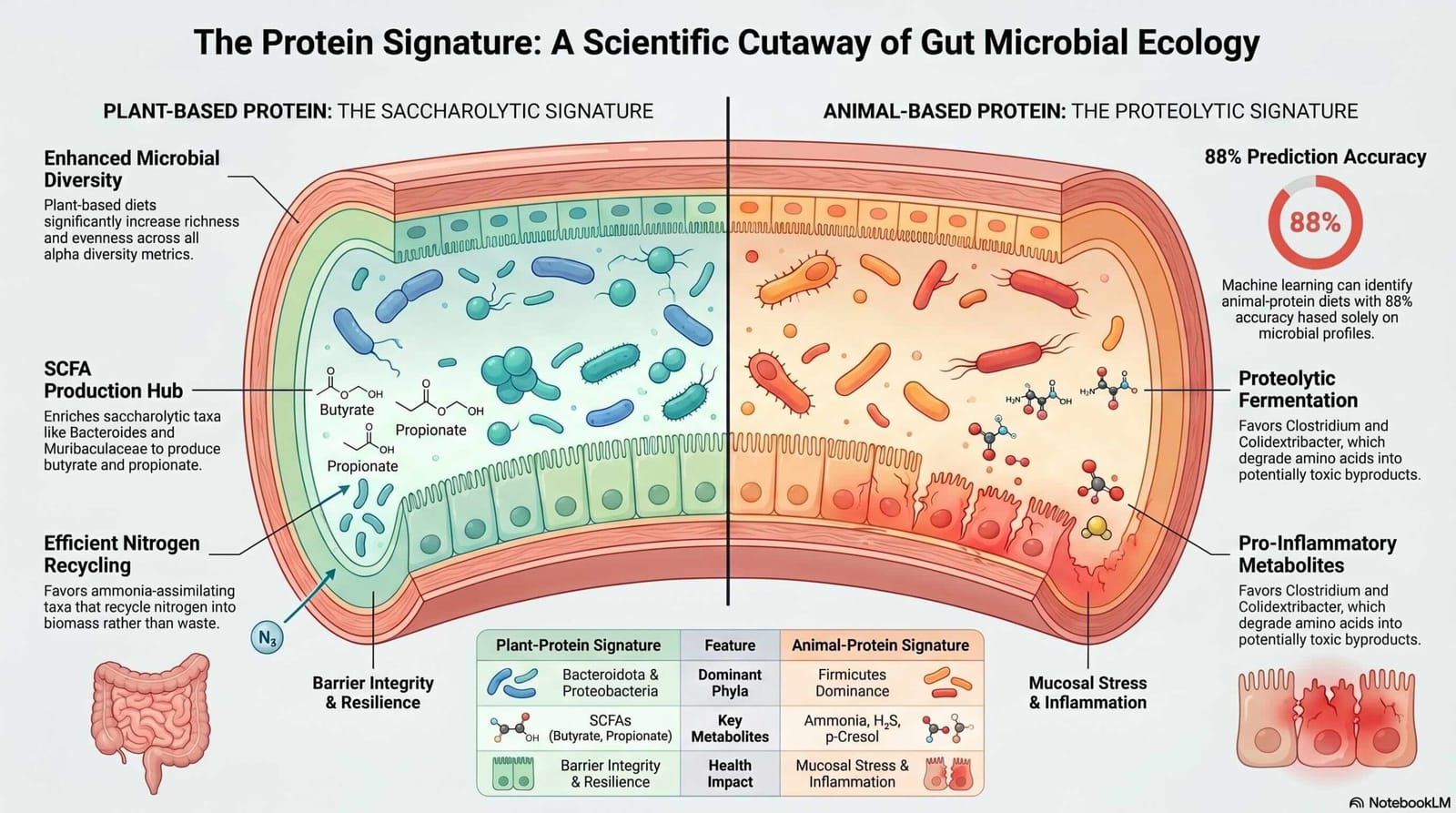
The most telling result is not an indicator of diversity, This is a prediction performance. Random forest models, trained solely on microbial profiles at the genus level, predicted the source of protein (plant or animal) with over 88% accuracy, achieving an area under the curve of 0.995 [1]. The source therefore leaves a reproducible microbiological signature, not merely background noise.
Method: A systematic integrative re-analysis of raw 16S rRNA sequencing data from ten independent controlled animal studies (n = 187), conducted according to PRISMA logic [1]. The key point to remember from the outset: this data is murine. The signal is robust; its direct extrapolation to humans is not yet, and the authors themselves call for clinical trials [1].
Vegetable: more diversity, more GAPC (General Agricultural and Climate Change)
Diets rich in plant protein increase the alpha diversity of the microbiota, measured by three complementary indices (Shannon, Inverse Simpson, Chao1) [1]. This diversity is accompanied by a favourable functional profile: plant proteins promote saccharolytic genera, such as Bacteroides, Muribaculaceae and Allobaculum, which ferment indigestible residues and produce short-chain fatty acids (SCFAs): butyrate, propionate, acetate [1].
- Butyrate The primary energy source for colonocytes, it strengthens the epithelial barrier and limits intestinal permeability.
- Propionate involved in the regulation of hepatic gluconeogenesis and satiety signalling.
- Acetate metabolic precursor, it participates in the regulation of colonic pH and nourishes other beneficial bacteria.
Network analysis particularly associates genres Alistipes and Muribaculaceae to the production pathways of AGCC [1].
Animal: a proteolytic profile with less favourable metabolites
Conversely, diets rich in animal protein promote proteolytic bacteria, notably Clostridium Strictly speaking, 1 and Colidextribacter [1]. Their putrid fermentation of amino acids generates metabolites whose accumulation is a concern: ammonia, which is cytotoxic to colonocytes at high concentrations; hydrogen sulphide, associated with low-grade intestinal inflammation; phenols and p-cresol, derived from aromatic amino acids and linked to pro-inflammatory activity [1]. The predicted metabolic pathways confirm this division: sulphur and branched-chain amino acid metabolism on the animal side, and SCFA production on the plant side [1].
What formulators can do with it
The source matters as much as the quantity. Communicating a high protein intake without specifying the source overlooks an increasingly relevant health argument. Differentiation by vegetable source becomes a substantiated positioning lever.
The fibre is inseparable. Saccharolytic bacteria favoured by plants need fermentable substrates. Combining plant proteins with prebiotic fibres (inulin, pectins, resistant starch) enhances the effect on the microbiota.
Hybrid mixtures remain to be explored. The study calls for work on plant-animal combinations. In the meantime, a significant portion of plant proteins (peas, soy, hemp, rice) justifies an argument for diversity.
Premium positioning benefits from data integration. Sports performance, active ageing, digestive health: a plant-based product can claim a documented microbiota benefit, provided that the formulation is consistent with this objective.
Limits to keep in mind
Two caveats. The data analysed is predominantly murine: caution is advised before extrapolating to humans, and the authors themselves call for controlled human trials [1]. Furthermore, the study isolates the «protein source» variable; in a real diet, carbohydrates, fats, fibre, and the matrix modulate the observed effects. The overall composition of the product remains decisive. The real question for a product manager: is your next «high protein» claim based on intake, or on a documented effect on the microbiota?
FAQ
Are animal proteins «bad» for the microbiome?
The study shows a more proteolytic profile, associated with less favourable metabolites, but in murine models. This is a documented profile difference, not a definitive verdict in humans [1].
Should fibre be associated with plant-based proteins?
Yes. Saccharolytic bacteria favoured by the plant require fermentable fibres to produce SCFAs; the synergy between plant proteins and prebiotics strengthens the effect [1].
Do these results apply to humans?
The signal is robust and reproducible, but derived from animal data. Its confirmation in humans requires dedicated clinical trials [1].