Who we serve Segment 02 · B2C health & nutrition brands

You sell to consumers. But what they're missing is the science.

Health buyers no longer fall for claims: they check — on Google, on ChatGPT, with their pharmacist. A brand that doesn't carry its science loses trust before the conversion.

The 2018 consumer claim doesn't hold in 2026. EFSA Article 13.5 compliance demands a scientific dossier — not a promise.
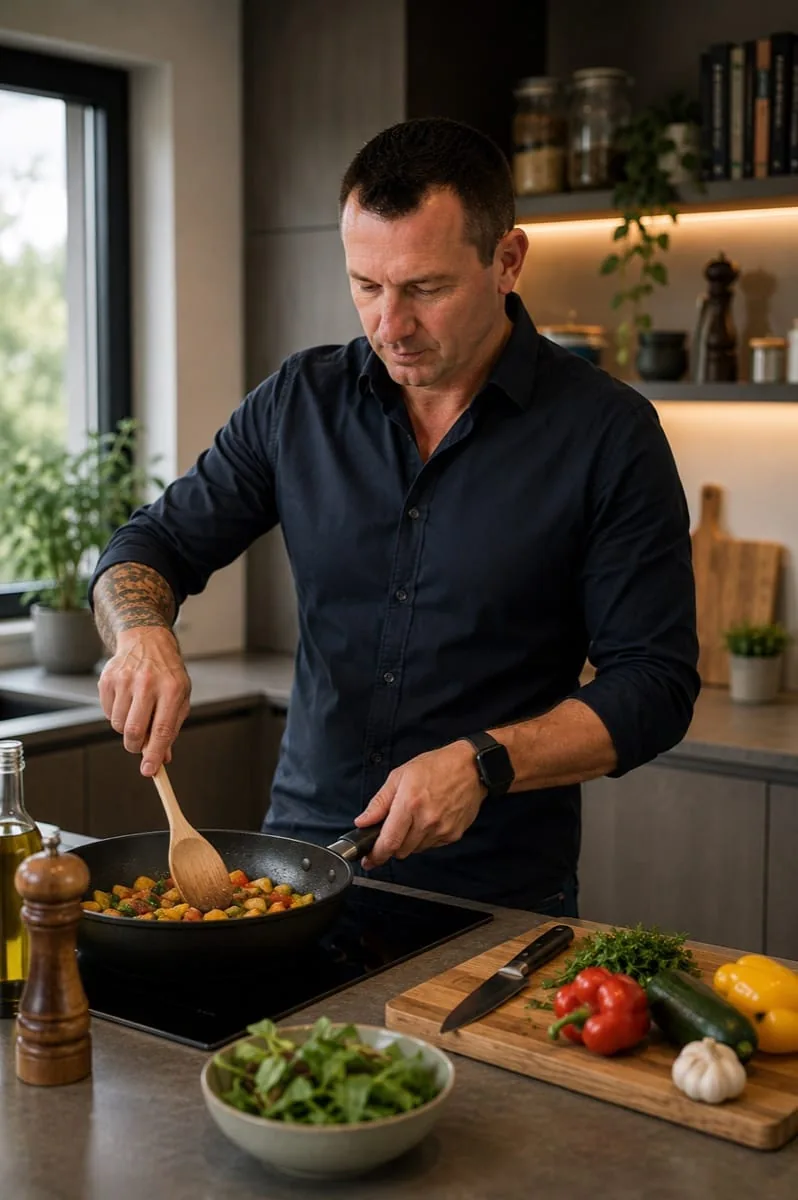
Nicolas Rousseau cooking — the finished product, consumer side
Nutrition gets tested in the kitchen too.
Three sectoral frictions

Three things that break in a B2C health brand today.

You've seen them. They're no longer marginal risks — they're the new market norm.

01 — The claim has become a risk

Your generic claims get requalified.

"Wellbeing," "energy," "immunity" get requalified or suspended. EFSA Article 13.5 compliance demands a tenable scientific dossier, not a marketing promise. An unsourced statement on packaging = a regulator's letter within six months.
02 — Content no longer stands up to scrutiny

Consumers verify now.

An informed buyer compares your site to consumer watchdog magazines and to NutriNet-Santé findings. If your science is weaker than a consumer magazine's, you get called out. And the recap travels via Google reviews and forums.

03 — The pharmacist is a prescriber

The pharmacy decides 40% of basket value.

In pharmacy, counter advice wins or loses 40% of the basket. Without a tenable scientific dossier, your sales team has no argument against pharmacists trained in micronutrition. And the pharmacist recommends the brand that gives them the right tools.

Four levers — what we activate

Four moves that restore the editorial position.

01

Claim-safe message house.

A central, legally validated reference (Article 13.5, ANSES, ANIA code of conduct). Every sales conversation, product sheet, LinkedIn post, newsletter refers to it. Quarterly updates whenever a claim or study moves.

02

Product one-pagers for prescription.

Pharmacy format. One page per product: consolidated claim, RCT, mode of action, contraindications, dosage, cost-in-use. Daily tool for field sales and pharmacy trainers.

03

Sourced consumer content.

SEO and LLM-citable articles, signed by named experts, with verifiable sources. No "according to recent studies." No "research shows." A health journalist or university nutritionist must be able to verify in under five minutes.

04

Active monitoring on contested claims.

If a consumer watchdog or a health influencer attacks, you have the response pre-written, sourced and legally validated. Activatable within 2h. No panic, no silence, no rushed press release.

Vignette · Anonymised case · B2C probiotics

A B2C probiotic brand had four claims requalified in six months and a press kit to rebuild. In four months of retainer: message house validated under Article 13.5, twelve product sheets rebuilt, defence line pre-written on six sensitive topics, first pickup in a major outlet without challenge.

4→0 Claims requalified
12 Sheets rebuilt
4mo Of retainer
They trust us
  • Yakult
  • Procelys by Lesaffre
  • Ennolys by Lesaffre
  • Lallemand Bio-Ingredients
  • Solyve
  • Bonduelle
  • Nutrition & Santé
  • Avril
  • HHOYA
  • Sunbloom
  • Angeopro
  • Claris Clinic
Frequently asked

Before you write, the useful answers.

01

Claim-safe by construction: Article 13.5 or 13.1, EFSA health claims and local codes checked before writing, not after. Compliance is a writing prerequisite, not a final proofread.

02

That is our test: withstand the critical read of a university nutritionist, not just a community manager. It is also one of the dimensions the Blueprint assesses.

03

Yes: a pre-written defence line on three to five risk topics, sourced, legally validated, deployable within two hours — in writing or live interview.

04

One voice, three audiences: messages calibrated for B2B, B2C and prescribers, but a single narrative coherence. If two audiences hear two stories, trust leaks from both ends.