

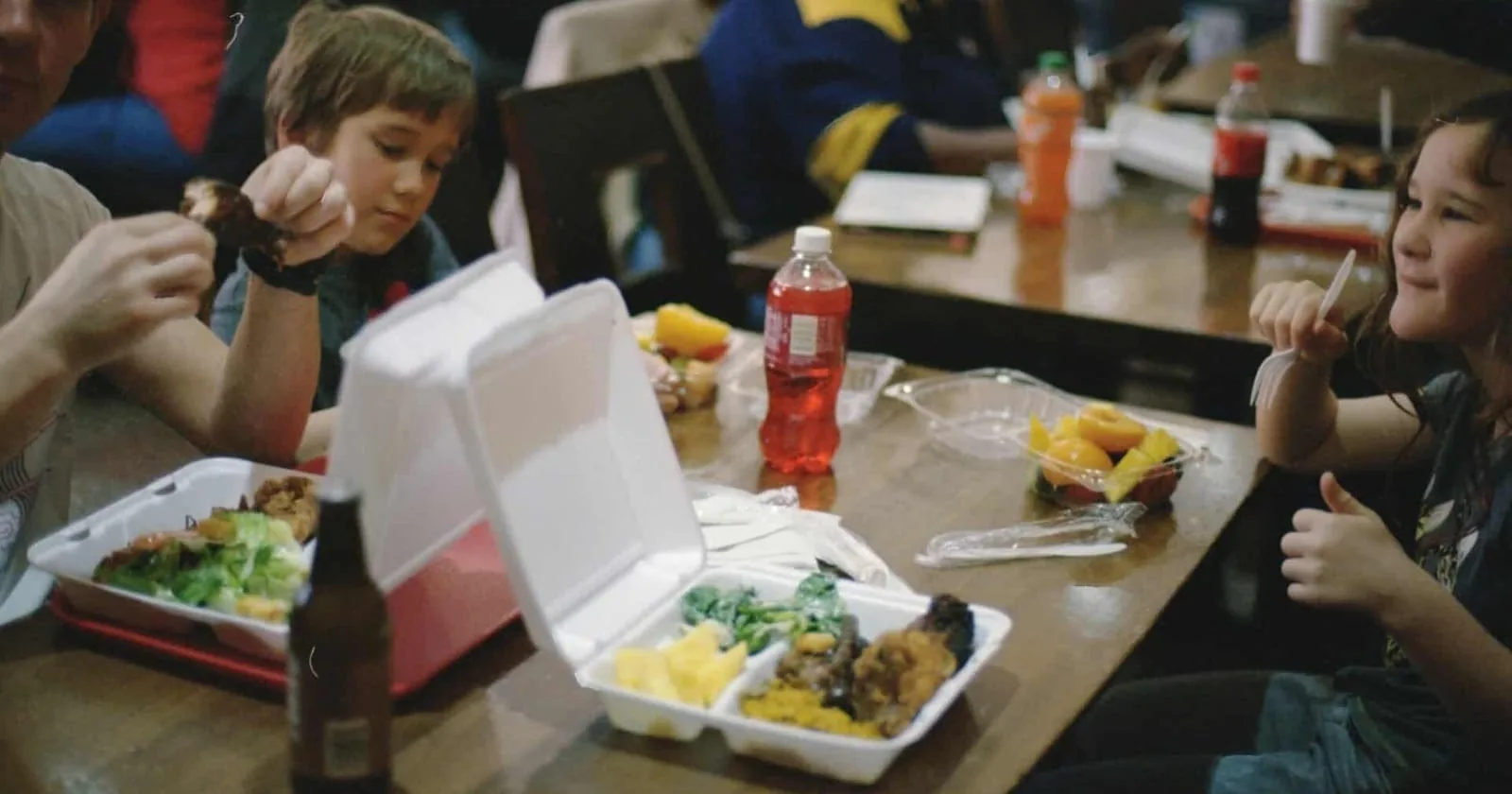
The World Health Organisation has just published its first global guidelines for school food environments. On the agenda: stricter nutritional standards, «nudges» to guide choices, and a global vision that goes well beyond the lunch tray. What happens in and outside school canteens could well redefine the eating habits of a generation.
Why is the canteen more than a meal?
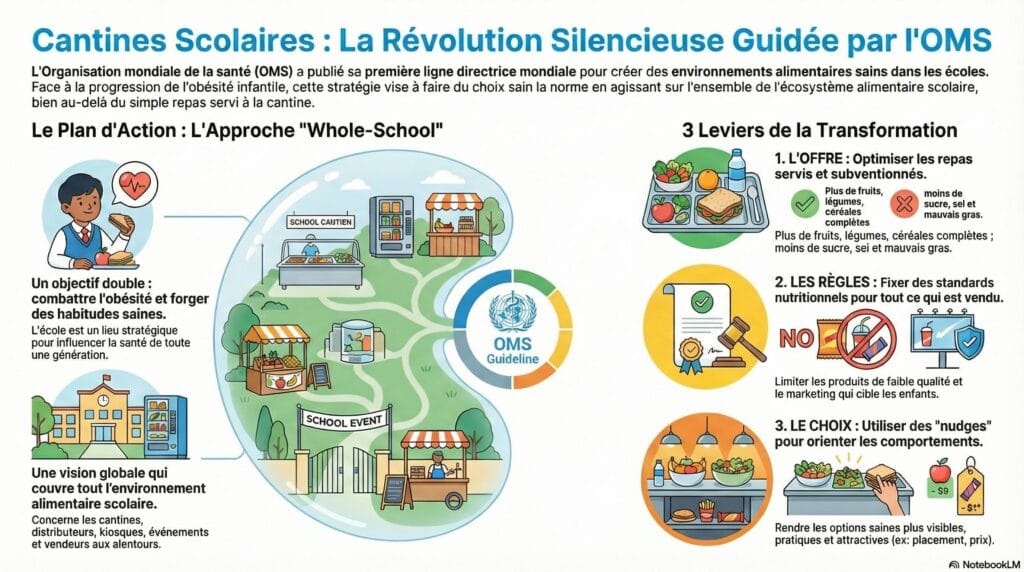
The new WHO guideline does more than just say what children should eat. It proposes a structured framework that covers all foods provided, sold or consumed in and around school - school canteens, kiosks, vending machines, school events, and even the vendors on the way out.
The context explains the urgency. Childhood obesity continues to make progress in most countries. The global nutritional targets have been extended to 2030, with a reinforced objective of reducing overweight in the under-fives. And children spend a considerable part of their day at school - making it a strategic place for shaping sustainable habits.
The approach promoted by the WHO has a name: «whole-school approach». The idea is to make healthy choice the norm rather than the exception, by simultaneously acting on what is available, how it is presented, and in what environment.
What are the three levers of the new WHO framework?
The guideline articulates its recommendations around three complementary pillars.
First lever: what we serve. The WHO recommends optimising the meals provided or subsidised by schools in school canteens to increase the availability of foods that contribute to a healthy diet. In practical terms: more fruit, vegetables, wholegrain cereals, quality proteins and drinking water. Fewer products high in free sugars, saturated fats, industrial trans-fatty acids and salt.
Second lever: the rules of the game. The guideline makes a strong recommendation in favour of nutritional standards for all food and drink sold at school - not just canteen meals. These standards should limit the supply of products with an unfavourable nutritional profile and restrict marketing aimed at children (in other words, distributors as a priority).
Third lever: choice architecture. The WHO issues a conditional recommendation on « nudges »These are interventions that guide behaviour without prohibiting it. Positioning fruit at eye level, pre-slicing apples to make them more practical, training canteen staff to verbally promote healthy options, adjusting relative prices. The meta-analyses cited show that placement-based nudges have the greatest impact on fruit and vegetable consumption.
What does the Trinidad and Tobago example show?
Theory is good. Practice is better. Several countries are already using this framework to strengthen their policies on school canteens and the overall school environment. The case of Trinidad and Tobago illustrates the level of demand towards which school standards could converge.
In January 2026, this Caribbean country announced tighter nutritional standards across more than 800 state schools. The plan, developed in partnership between the Ministries of Education and Health, builds on a precedent: sweetened beverages have been banned from schools since 2017.
The new policy sets rules for every snack and meal sold on school premises. Sweetened and caffeinated drinks are prohibited - soft drinks, energy drinks, juice drinks with added sugars. Limits apply to calories, sugar, fat and sodium in pre-packaged products. Highly processed foods targeted at children give way to balanced meals - fruit or vegetables, lean protein, appropriate starches, cooked by baking, grilling or steaming. The release explicitly names caffeine and artificial sweeteners among the substances behind the tightening.
The timetable is tight: rollout during the 2025-2026 school year, training for concessionaires and vendors, menu adjustments. Principals are responsible for passing the rules on to vendors and parent-teacher associations. Monitoring runs on termly evaluations and spot checks by district education and health officers. A list of approved beverages comes with the text.
How does this framework fit into a wider chain?
This guideline does not float in a vacuum. The WHO has explicitly included this in its agenda for transforming food systems. School policies are linked to other levers: restrictions on food marketing aimed at children, tax measures (taxes on sugary products, subsidies for healthy foods), nutritional labelling.
The challenge is to align the different food environments. A child exposed to strict standards in the school canteen, but bombarded with advertisements for sugary snacks on television, receives contradictory signals. Policy coherence is becoming a key factor in effectiveness.
La School Meals Coalition, supported by World Food Programme, has set itself an ambitious target: give every child access to a healthy meal by 2030. The WHO guidelines provide the technical framework for achieving this.
What will change in practice in school canteens?
For families, the changes will be gradual but visible. Fewer soda machines and chocolate bars in the corridors. Reformulated menus with less salt, less sugar and more fibre. Fruit presented in a more attractive way. Better-sized portions.
For local authorities and school catering managers, it’s an opportunity to revision of specifications. Nutritional criteria will become stricter, with thresholds derived from WHO recommendations. Traceability and sustainability of supplies will gradually enter the equation.
For food manufacturers, this is a clear signal: products intended for the school market will have to meet increasingly demanding nutritional profiles. Reformulation is becoming the order of the day - reducing sugars, saturated fats and salt, and enriching them with fibre and micronutrients.
Why call it a quiet revolution?
The WHO guideline is not legally binding. It is a recommendation to governments. But that is precisely its strength: it sets out a global reference framework that governments, health agencies and local authorities will gradually incorporate into their regulations and calls for tender.
Timetables will vary. Some countries, like Trinidad and Tobago, are moving fast. Others will integrate these guidelines more slowly, depending on political changes and budgetary priorities. But the direction is clear.
What is at stake in school canteens goes beyond the question of the menu of the day. It’s an attempt to reprogramme the eating habits of an entire generation, by acting on the environment rather than on individual will alone. A silent revolution, one meal tray at a time.
FAQ
Does the WHO guideline impose numerical thresholds for sugar, salt or fat?
It proposes a framework and principles aligned with the WHO’s nutritional recommendations, but the definition of detailed thresholds is the responsibility of the Member States, which adapt them to their regulatory and dietary contexts.
What’s the difference between nudges and bans?
Nudges modify the architecture of choices - placement, presentation, price, verbal incentives - to make healthy options more visible and attractive, without formally banning others. Bans, on the other hand, simply exclude certain products (such as sugary drinks in Trinidad and Tobago since 2017).
Which products risk being excluded from schools and school canteens?
Products high in free sugars, saturated or trans fats, salt, energy drinks and pre-packaged snacks that do not comply with nutritional checklists are particularly targeted.
What is the timeframe for implementation?
This varies from country to country. Some are planning mandatory implementation from 2026-2027, while others will gradually incorporate these guidelines between now and 2030.
Sources
- WHO - Policies and interventions to create healthy school food environments: WHO guideline, 2026. who.int
- WHO - WHO urges schools worldwide to promote healthy eating for children, 27 January 2026. who.int
- UN News - From lunch tray to lifelong health: WHO sets global standards for healthy school meals. news.un.org
- Trinidad and Tobago Ministry of Education - Strengthening School Nutrition Standards to Support Learning and Wellbeing, media release, 9 January 2026. moe.gov.tt
- TTT - Education Ministry steps up efforts to promote healthier food choices in schools, January 2026. ttt.live
- HCC & TT NCDA - Open letter on school nutrition policy. saludablesaberlo.org
- Rikolto - A powerful food policy: the mise-en-place for good school meals. rikolto.org
This framework is part of a European wave of nutrition policies: see the 2025 Belgian dietary recommendations under the microscope.
Does this subject concern you?
→ Do you have a specific question? Contact us
→ Need structured support? Find out more about our formats - from one-shots to editorial partnerships: See the offers
→ Would you like to discuss it in person? 30 minutes to define your needs, with no obligation: Reserve a slot